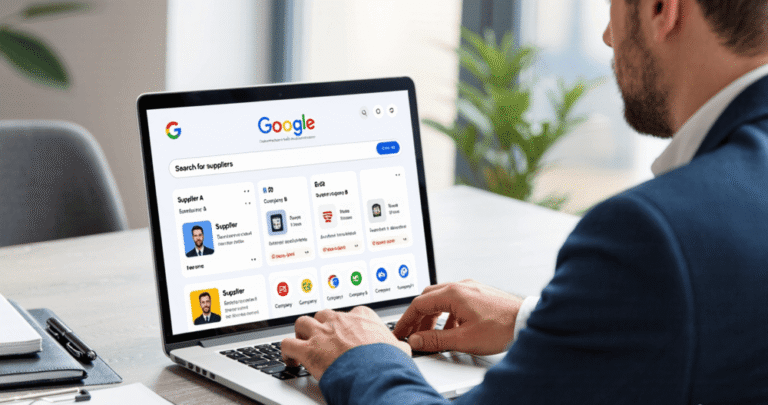
Finding reliable phone parts suppliers in China can feel overwhelming. With thousands of vendors claiming top quality and best prices, wholesalers and repair businesses often waste time and money on disappointing products and unreliable partners.
The best phone parts suppliers in China combine manufacturing expertise, quality control processes1, and international business capabilities2. Top suppliers typically have 5+ years of industry experience, multiple quality tiers to serve different price points, and transparent business practices with verifiable credentials.

Huaqiangbei electronics market in Shenzhen, China
Table of Contents hide👉 Who this list is for
This guide is written for wholesale buyers sourcing 500+ screens monthly, repair chains managing multi-location inventory, distributors, and importers handling container-level shipments. If you run a single repair shop ordering 10–50 units at a time, online marketplaces like AliExpress or regional wholesalers will likely serve you better than the suppliers listed here.
The businesses covered below work with MOQs, OEM arrangements, shipping terms, and long-term account relationships — the sourcing realities of serious B2B buyers.
🎯 Already know what you need?
Skip the research. Talk to FIZON directly — multi-brand coverage across iPhone, Samsung, Xiaomi, and Huawei from a single Shenzhen-direct channel, with OEM/ODM support for chain buyers and importers.
Why Trust This Supplier List
This supplier list is based on over 11 years of experience sourcing mobile phone spare parts in China, including factory visits, supplier audits, and long-term cooperation with repair businesses worldwide.
The evaluation focuses on practical factors that matter to wholesalers and repair shops, including product consistency3, return rates, quality control processes1, logistics capability, and long-term reliability.
Rather than simply comparing prices, the goal of this guide is to highlight suppliers that demonstrate stable quality and professional business practices within the mobile repair industry.
After 11+ years sourcing phone parts from factories across China and building relationships throughout Huaqiang North (the world’s largest electronics market), I’ve witnessed countless suppliers rise and fall. In this 2026 guide, I’ll share the suppliers that consistently deliver quality, reliability, and value based on my firsthand experience and industry connections.
How These Suppliers Were Evaluated
The suppliers listed in this guide were evaluated based on several industry factors:
• Product consistency and quality control procedures
• Realistic return rate ranges observed in wholesale orders
• Transparency of grading systems4 (INCELL, OLED, Refurbished, etc.)
• Ability to support international wholesale buyers
• Warranty policy and after-sales support5
• Stability of supply chain relationships6
• - OEM capability for chain-buyer private label or custom packaging
These criteria reflect the most common concerns raised by phone repair businesses and spare parts wholesalers when choosing long-term suppliers.
Who Are the Most Reliable iPhone Screen Suppliers in China?
I've seen wholesale buyers order screens from random suppliers only to receive mixed batches with mismatched quality tiers, dead pixels, and touch sensitivity issues. At wholesale volumes, a 5% defect rate on a 1,000-unit shipment can wipe out a quarter's profit.
The most reliable iPhone screen suppliers7 in China include FIZON, EZ Fix, JK Screen, and TopLCD, all offering multiple quality grades from standard INCELL to premium OLED options. These suppliers perform 100% functionality testing, provide 12+ month warranties, and offer transparent quality grading systems4.
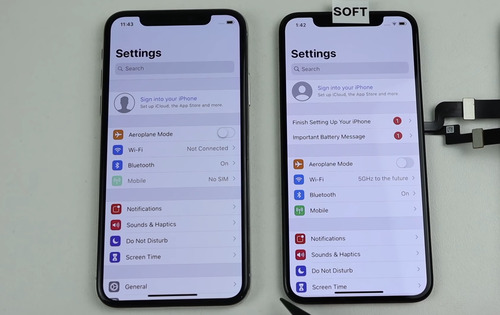
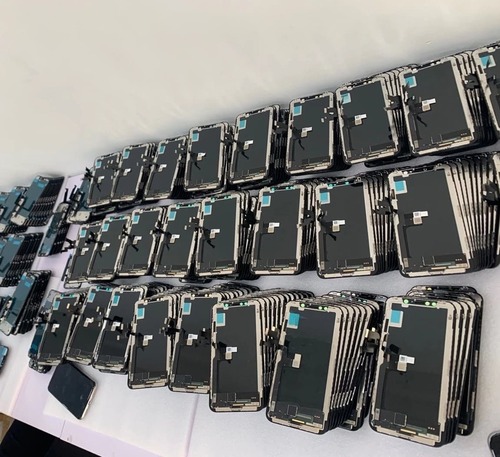
Quality testing process for iPhone screens
Finding reliable iPhone screen suppliers7 requires looking beyond flashy websites and low prices. Having personally visited dozens of factories and testing facilities throughout China, I’ve developed a comprehensive evaluation system to identify truly dependable suppliers.
The most critical factor in screen quality is the supplier’s relationship with manufacturing facilities. Top suppliers either operate their own production lines or have exclusive partnerships with manufacturers, giving them direct control over quality standards. In contrast, many smaller vendors simply purchase from general markets and perform minimal quality checks.
For buyers sourcing replacement displays in bulk, see our iPhone screens wholesale from FIZON page for model coverage, MOQ, quality grades, and shipping options.
Here are my top recommendations for iPhone screen suppliers7 based on consistent performance:
- FIZON (Shenzhen) — Multi-brand wholesale channel with 11+ years sourcing from Huaqiangbei. Particularly strong in premium OLED tiers (GX, DD, JK, RJ with 100% functionality testing and consolidated shipping that lets buyers combine iPhone, Samsung, Xiaomi, and Huawei in one container. Supports OEM/ODM for chain buyers.
- EZ Fix (Guangzhou) — Known for consistent mid-range options, EZ Fix provides reliable INCELL and OLED screens at competitive prices. Their quality control process includes 15-point testing for each screen.
- JK Screen (Shenzhen) — With one of the largest inventories in China, JK Screen offers every quality tier from budget to premium. Their strength lies in consistent grading and transparency about each product's specifications.
For buyers sourcing JK panels in volume, see our reliable JK iPhone screens supplier page for current JK Incell, Hard OLED, and Soft OLED stock and wholesale pricing.
- TopLCD (Dongguan) – A manufacturer-direct supplier specializing in high-volume orders with some of the industry’s most stringent quality control processes1, including aging tests that simulate months of use within days.
When evaluating screen suppliers, I recommend requesting detailed information about:
| Evaluation Criteria | What to Look For | Red Flags |
|---|---|---|
| Testing Methodology | Multi-stage testing with specific parameters | Vague descriptions or "100% perfect" claims |
| Return Rate Data | Transparency about actual return rates (0.8-4% is realistic) | No data or claims of 0% returns |
| Inventory Source | Direct manufacturing connections or exclusive partnerships | Multiple middlemen or market purchasing |
| Consistency Between Orders | Batch tracking systems and quality control documentation | Significant variation between orders |
| Warranty Terms | Clear, written warranty with straightforward claim process | Verbal promises or complicated claim procedures |
By prioritizing these factors over simply finding the lowest price, you’ll avoid the costly cycle of returns, customer complaints, and reputation damage that comes from working with unreliable suppliers.
Want FIZON's current iPhone screen price list?
Get sample pricing across GX, DD, JK, and RJ tiers plus MOQ and lead time — sent directly to your WhatsApp.
Which Suppliers Offer the Best Prices on Samsung Phone Parts?
Before comparing suppliers, use our Samsung screen wholesale page to separate grades, original panel types, and with-frame versus without-frame options by Galaxy series.
Many wholesalers I've met were initially attracted to suppliers offering incredibly low prices on Samsung parts, only to discover that corners had been cut on testing or components, leading to high failure rates on shipments of 500+ units.
Top Samsung parts suppliers in China with competitive pricing include SupremeParts, GalaxyFix, and Shenzhen Mobile Supply Chain. These suppliers offer genuine Samsung service packs starting at $45-70 and high-quality aftermarket options from $25-45, with bulk discounts of 5-15% available for orders over $5,000.

Wholesale Samsung phone parts inventory
Samsung parts pricing is particularly complex due to the variety of models and the significant differences between genuine service parts and aftermarket alternatives. After analyzing pricing across hundreds of orders, I’ve identified suppliers that consistently offer the best value (not just the lowest prices).
The most competitive Samsung parts suppliers maintain direct relationships with either Samsung’s authorized refurbishment partners or with factories that produce components for Samsung’s supply chain. This allows them to offer prices 10-30% lower than general market rates while maintaining quality standards.
Here’s my assessment of the top Samsung parts suppliers based on pricing and value:
- SupremeParts (Shenzhen) – Specializes in Samsung service pack screens at 5-10% below market rates. Their direct relationship with Samsung’s service network allows them to offer genuine parts with full functionality, including fingerprint sensors and edge features.
- GalaxyFix (Guangzhou) – Offers the best mid-range option with TFT and OLED screens at competitive prices. Their partial service packs maintain most original functionality at 30-40% lower costs than full service packs.
- Shenzhen Mobile Supply Chain – Provides the best bulk pricing8 for high-volume buyers, with tiered discounts starting at $3,000 orders and increasing with volume. Their comprehensive catalog covers virtually every Samsung model.
- FIZON (Shenzhen) — Multi-brand wholesale channel offering both Samsung service-pack and premium aftermarket tiers for every Galaxy generation, with transparent grading. The key advantage for B2B buyers: consolidated shipping combining Samsung with iPhone, Xiaomi, and Huawei parts in one shipment to cut 30–60% on logistics.
When comparing Samsung parts pricing, be sure to evaluate these often-overlooked factors that affect total cost:
- Functionality completeness – Lower-priced screens often lack full compatibility with features like edge sensitivity, fingerprint sensors, or proper brightness calibration
- Failure rates – The true cost includes return rates; a $35 screen with 10% failures ultimately costs more than a $40 screen with 2% failures
- Shipping efficiency – Some suppliers offer seemingly lower prices but pack inefficiently, resulting in higher shipping costs per unit
- MOQ requirements – The best pricing often requires significant minimum order quantities9; evaluate whether the discount justifies potential inventory tie-up
Based on my experience, wholesale buyers typically find the best value in the mid-range market, where quality is sufficient for end-customer satisfaction while prices allow for healthy profit margins of 40–60% after distribution.
Where to Find Quality Xiaomi and Huawei Parts Wholesale?
Last year in Shenzhen, I met multiple repair chains struggling to source reliable Xiaomi and Huawei parts at scale. One chain had ordered 500 Xiaomi screens from three separate vendors — the batches looked identical but had wildly inconsistent touch response, turning into a warranty nightmare.
The best wholesale suppliers for Xiaomi and Huawei parts include XiaomiParts Pro, Hua-Supply, Eastern Electronics, and FIZON. These suppliers offer both original and high-quality aftermarket options with prices ranging from $18-45 for LCD screens and $25-65 for OLED displays depending on model and quality tier.
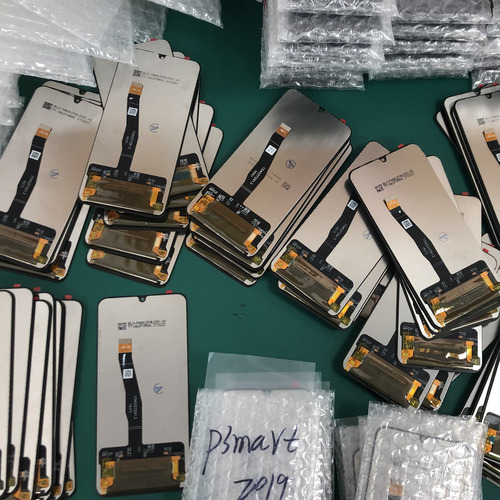
Wholesale Xiaomi and Huawei phone parts packaging
The market for Xiaomi and Huawei parts has evolved significantly in recent years as these brands have expanded globally. While historically challenging to source outside China, several suppliers have developed reliable international distribution channels for these components.
The key to finding quality Xiaomi and Huawei parts is understanding the unique supply chain for these predominantly Chinese brands. Unlike Apple and Samsung parts, which have well-established global distribution networks, Chinese brand parts often come directly from production overruns or from the same factories manufacturing the original components.
Here are my recommendations for the most reliable Xiaomi and Huawei parts suppliers for wholesale buyers:
- XiaomiParts Pro (Shenzhen) — With direct connections to Xiaomi's supply chain, they offer parts virtually indistinguishable from those used in original production. Their catalog is particularly strong for popular global models like the Redmi and Mi series.
- Hua-Supply (Dongguan) — Specializing exclusively in Huawei components, this supplier provides everything from display assemblies to small components like cameras and charging ports. One of the few suppliers with consistent access to parts for newer Huawei models despite global supply challenges.
- Eastern Electronics (Guangzhou) — Offers the most comprehensive catalog for both brands, including parts for regional variants not widely available elsewhere. Their quality control process includes model-specific testing that accounts for the unique characteristics of each phone.
- FIZON (Shenzhen) — Multi-brand wholesale channel and one of the few suppliers offering consistent access to both Xiaomi and Huawei — including newer models despite supply constraints. The key B2B advantage: buyers can consolidate Xiaomi and Huawei parts with iPhone and Samsung in a single Shenzhen-direct shipment, cutting logistics costs by 30–60%.
When sourcing Xiaomi and Huawei parts, it’s essential to navigate these unique challenges:
- Model verification — Many models have multiple regional variants with slight component differences; ensure suppliers can match specific model numbers
- Software compatibility — Some replacement parts, particularly fingerprint sensors and cameras, require specific firmware compatibility
- Authentication features — Higher-quality suppliers provide parts that maintain compatibility with security features that might otherwise trigger verification warnings
Based on repair shop feedback, here’s a general pricing guideline for Xiaomi and Huawei replacement parts in 2026:
| Component Type | Budget Tier | Standard Tier | Premium/Original |
|---|---|---|---|
| LCD Screens | $18-25 | $25-35 | $35-45 |
| OLED Displays | $25-35 | $35-50 | $50-65 |
| Battery | $8-12 | $12-18 | $18-25 |
| Charging Port | $3-5 | $5-8 | $8-12 |
| Camera Modules | $15-25 | $25-40 | $40-65 |
Xiaomi and Huawei parts often offer better profit margins for repair chains compared to iPhone and Samsung parts — lower acquisition costs while maintaining similar end-customer pricing expectations.
Consolidate iPhone + Samsung + Xiaomi + Huawei in one shipment
FIZON's multi-brand sourcing from a single Shenzhen channel cuts shipping costs by 30–60% compared to buying from four separate suppliers. Get a combined wholesale quote covering all four brands in one conversation.
What Are the Best Sources for Wholesale iPhone Battery Replacements?
A chain buyer recently told me about ordering 500 iPhone batteries from a random marketplace supplier. Within two weeks they had 70 batteries swell and 30 devices with battery percentage issues — a warranty and customer-service disaster that cost far more than the "savings."
Top iPhone battery suppliers include PowerMax, BatteryPro, iTech Power Solutions, and FIZON. Quality batteries cost $8-15 wholesale depending on iPhone model and feature either properly transferred IC boards or diagnostic-type batteries that don’t require IC transfers, with the best suppliers offering 0.5-1% or less defect rates.
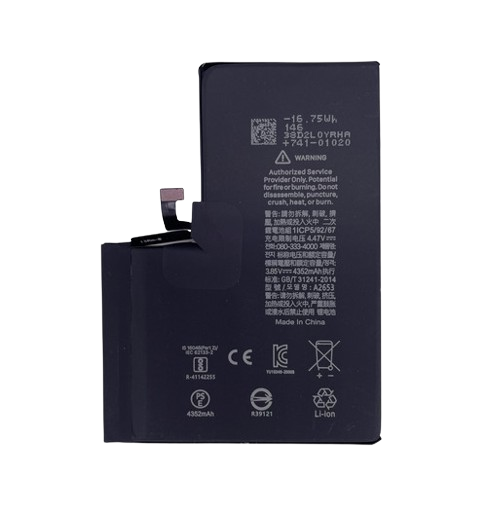
iPhone replacement batteries with IC boards
iPhone battery sourcing requires specialized knowledge due to Apple's serialization and battery management systems. After analyzing hundreds of battery suppliers, I've identified those that consistently provide reliable products with the necessary technical specifications.
The most important technical consideration for iPhone batteries is the IC (Integrated Circuit) board. Apple's batteries contain a chip that communicates with the iPhone, providing information about battery health, cycle count, and temperature. There are two approaches to replacement batteries:
- IC Transfer Batteries — These require the technician to physically move the IC board from the original battery to the replacement through a delicate soldering process. While more complex to install, these maintain full battery health reporting functionality.
- Diagnostic Batteries — A newer alternative that comes with a pre-installed compatible IC that can pair with the iPhone. Easier to install but may offer slightly less comprehensive battery health data in some models.
Based on extensive testing and wholesale customer feedback, my recommendations for iPhone battery suppliers:
- PowerMax (Shenzhen) — Specializes exclusively in batteries with an industry-leading 0.3% defect rate. Their batteries maintain capacity longer than most competitors based on cycle testing data.
- BatteryPro (Guangzhou) — Offers exceptional value with batteries that deliver 93–97% of original capacity at competitive prices. Their diagnostic batteries are particularly reliable for newer iPhone models.
- iTech Power Solutions (Dongguan) — Provides the most comprehensive range of options including original pulled batteries (from unused devices), premium replacements, and standard alternatives to fit different price points.
- FIZON (Shenzhen) — Multi-brand wholesale channel where iPhone batteries are one piece of a broader consolidated-shipment offering. All batteries undergo charge/discharge cycle testing before shipping, with both IC-transfer and diagnostic types supported. Particularly suited to chain buyers who want battery orders bundled with screens and small components in a single shipment.
When evaluating battery suppliers, these technical specifications matter most:
| Specification | What to Look For | Why It Matters |
|---|---|---|
| Actual Capacity | Within 5% of advertised mAh | Affects runtime and longevity |
| Charge Cycles | Rated for 500+ cycles | Determines battery lifespan |
| Internal Resistance | Low and consistent | Prevents overheating and ensures stable performance |
| IC Compatibility | Model-specific programming | Enables proper battery health reporting |
| Cell Origin | Japan/Korea/Tier 1 Chinese cells | Higher quality lithium cells maintain capacity longer |
Through my testing, I’ve found that the price difference between budget and premium iPhone batteries ($3-5 per unit) is easily justified by the reduction in defect rates, customer complaints, and warranty claims. The best suppliers provide detailed specification sheets and are transparent about their testing methodologies.
How to Find Reliable Small Component Suppliers for Phone Repair?
A repair chain owner once told me they were spending more on shipping small components (cameras, charging ports, etc.) than on the parts themselves. After connecting them with a consolidated supplier, they reduced logistics costs by 60%.
Leading small component suppliers include MicroParts Hub, Component Central, RepairTech, and FIZON. These suppliers offer comprehensive catalogs of cameras, charging ports, buttons, and sensors for all major brands with prices typically 70-85% lower than OEM parts while maintaining 90%+ functionality equivalence.
Small components present unique sourcing challenges due to their diversity, technical complexity, and the logistical challenges of managing hundreds of tiny parts. My experience has shown that consolidating these purchases with suppliers specializing in comprehensive component catalogs yields the best results.
The most efficient suppliers offer these advantages for small component sourcing:
- Comprehensive inventory — Eliminating the need to place orders with multiple vendors
- Component matching — Ensuring parts are specifically compatible with exact model variants
- Bulk packaging options — Reducing per-unit costs for high-use items
- Quality grading systems — Providing options at different price/quality points
Based on these criteria, here are my recommended suppliers for small phone components:
- MicroParts Hub (Shenzhen) — Specializes exclusively in small components with the most comprehensive catalog covering over 95% of repair needs across all major brands. Their logically organized inventory system and bulk discounts make them ideal for high-volume repair chains.
- Component Central (Guangzhou) — Offers exceptional technical documentation, including compatibility charts and installation guides. Their specialization in camera modules and charging assemblies ensures particularly reliable performance in these critical components.
- RepairTech (Dongguan) — Provides the best balance of quality and price for mainstream models, with options in different quality tiers. Their testing procedures for functional components like speakers and vibration motors are particularly thorough.
- FIZON (Shenzhen) — Multi-brand wholesale channel offering pre-tested component bundles organized by repair type (iPhone screen replacement bundle, Samsung charging repair bundle, etc.), which reduces SKU-level sourcing overhead. Best suited to chain buyers who want small components bundled with screens and batteries in one Shenzhen-direct shipment.
For wholesale buyers optimizing small component sourcing, the recommended approach:
- Categorize by usage volume — Identify high-use components (charging ports, camera glass, etc.) that warrant bulk purchasing
- Consolidate orders — Combine small component orders to reach minimum order values that qualify for better shipping rates
- Standardize quality tiers — Establish clear quality expectations for different components based on their impact on device functionality
- Request test reports — For critical components like cameras and microphones, ask suppliers for sample test reports demonstrating functionality metrics
Current market pricing expectations for quality small components in 2026:
| Component Type | Wholesale Price Range | Typical Markup in Repair |
|---|---|---|
| Charging Port | $2-8 | 300-500% |
| Front/Rear Camera | $5-25 | 200-400% |
| Earpiece Speaker | $1-5 | 400-600% |
| Vibration Motor | $2-7 | 300-500% |
| Button Assemblies | $1-4 | 500-800% |
Small components often deliver the highest profit margins in repair operations, making reliable sourcing particularly valuable for business profitability.
What Are the Most Reputable LCD and OLED Panel Manufacturers in China?
During a factory visit last year, I observed firsthand the difference between top-tier and average manufacturing facilities. The premium factory had multiple quality checkpoints, clean room environments, and advanced calibration equipment that explained their consistently superior displays.
Leading LCD and OLED manufacturers in China include TianMa, BOE, Visionox, and ChinaStar. These manufacturers produce displays for major brands and offer wholesale channels with prices typically 20-30% lower than market rates for buyers who can meet minimum order quantities of 100-500 pieces depending on model.

OLED panel manufacturing facility in China
Understanding the actual manufacturers behind phone displays provides significant advantages for serious buyers. While many suppliers act as intermediaries, developing direct relationships with manufacturers offers better pricing, quality assurance, and consistency between orders.
The display manufacturing landscape in China has evolved dramatically in recent years, with significant investments in advanced technology allowing Chinese manufacturers to close the gap with Korean and Japanese display giants.
Based on my factory visits and industry relationships, here are the standout manufacturers:
-
BOE Technology (Beijing) – China’s largest display manufacturer, BOE now produces OLED panels for Huawei, Apple, and Samsung devices. Their advanced manufacturing facilities rival Samsung Display in technology, with particular strength in flexible OLED panels.
-
TianMa Microelectronics (Shanghai) – Specializing in mid-range LCD and AMOLED displays, TianMa has become a key supplier for numerous Android brands. Their quality control systems are particularly rigorous, resulting in exceptional consistency.
-
Visionox (Kunshan) – A pioneer in Chinese OLED technology, Visionox produces both rigid and flexible OLED displays. They’ve developed proprietary manufacturing techniques that have reduced defect rates by approximately 35% compared to industry averages.
-
ChinaStar Optoelectronics (Shenzhen) – A division of TCL Technology, ChinaStar has emerged as a leader in cost-effective display manufacturing while maintaining competitive quality standards.
For wholesale buyers looking to develop relationships with these manufacturers, it’s important to understand their business models:
- Direct purchasing typically requires minimum orders of 300-1,000 pieces per model and established business credentials
- Authorized distributors offer lower MOQs (100-300 pieces) while still providing factory-direct pricing and quality
- Production overrun channels occasionally offer opportunities to purchase genuine factory displays that exceeded production requirements at 15-25% discounts
When evaluating display quality from these manufacturers, these technical specifications prove most revealing:
| Specification | Premium Indicators | Why It Matters |
|---|---|---|
| Color Gamut | DCI-P3 >92% | Ensures accurate color reproduction |
| Brightness | >500 nits | Affects outdoor visibility |
| Contrast Ratio | >5000:1 for OLED | Creates deeper blacks |
| Touch Response | <25ms latency | Provides smoother user experience |
| Panel Consistency | <2 Delta-E variation | Prevents uneven coloration |
By understanding the manufacturing source of display components, repair businesses and wholesalers can make more informed decisions about quality tiers and pricing expectations.
How to Verify Supplier Legitimacy and Avoid Scams?
A new wholesale buyer once shared how they lost $15,000 on their first bulk order when the "supplier" disappeared after payment. At B2B volumes, a single scam can wipe out a quarter of profit — verification is not optional.
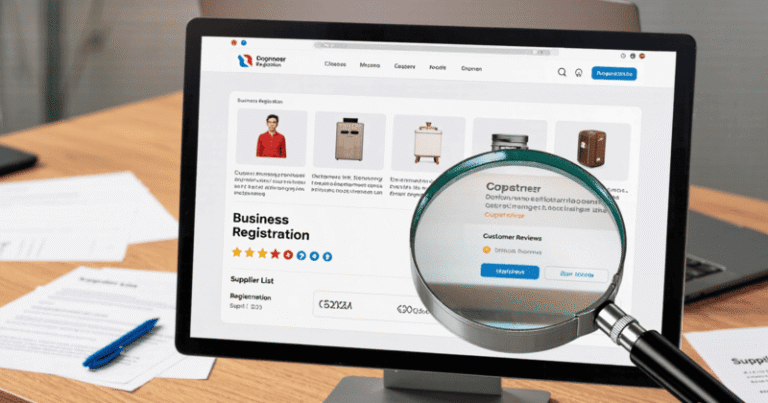
Legitimate suppliers provide business licenses, have physical facilities you can verify (via video call if not in person), offer multiple secure payment options, and have established industry presence with verifiable references.
Recommended Verification Process
- Business registration verification
- Physical video inspection
- Industry presence check (trade shows, long-term online presence)
- Sample testing protocol before placing the first bulk order
- Secure payment methods (letter of credit, escrow for new accounts)
Supplier Verification Methods
| Supplier Type | Primary Verification Method | Secondary Verification |
|---|---|---|
| Manufacturers | On-site audit or video tour | Third-party sample testing |
| Wholesalers | Business license verification | Trade show participation |
| Trading Companies | Transparent supply chain documentation | Customer references |
| Online Marketplaces | Escrow payment protection | Seller rating history |
Common scam patterns include:
- Pressure tactics about limited supply
- Inconsistent company documentation
- Hidden physical location information
- Prices 30% below market average
What Makes a Phone Parts Supplier Truly Exceptional?
After evaluating hundreds of suppliers and working with dozens personally, I’ve found that price and quality are just the beginning.
Exceptional phone parts suppliers combine consistent quality, competitive pricing, and value-added services like inventory support, technical assistance, and warranty efficiency.

Supplier providing technical support to repair shop
Key characteristics include:
- Quality consistency across batches and over years
- Transparent communication on stock, lead times, and quality tiers
- Technical expertise (can answer model-specific and tier-specific questions)
- Inventory partnership (helps forecast and pre-allocate stock)
- Efficient warranty handling (clear process, fast turnaround)
- Market intelligence sharing (new model launches, supply shifts)
- Logistics optimization (consolidated shipping, FOB flexibility)
The most successful wholesale buyers and repair chains develop strategic relationships with 2–4 core suppliers rather than constantly chasing the lowest price across a dozen vendors.
FIZON strives to exemplify these qualities through transparent business practices and long-term customer partnerships — particularly for chain buyers and importers who need a single multi-brand channel covering iPhone, Samsung, Xiaomi, and Huawei from one Shenzhen-direct source.
🤝 Ready to skip the 3-month supplier evaluation cycle?
Start with a sample order from FIZON. We work with reasonable MOQs for first-time wholesale accounts, ship direct from Shenzhen across all four major brands, and support OEM for chain buyers who need private label or custom packaging.
Transparency Note
This guide is intended to provide industry insights for repair shops and wholesalers looking for reliable phone spare parts suppliers in China.
The suppliers mentioned are examples of companies operating in the market based on industry observation, supplier interactions, and publicly available information.
Businesses should always conduct their own verification and testing before establishing commercial relationships with any supplier.
Conclusion
The top phone parts suppliers in China for 2026 offer more than just competitive prices. They provide quality consistency, technical expertise, verification transparency, and strategic partnership value at the volumes real wholesale businesses require.
By developing relationships with reputable suppliers — particularly those offering consolidated multi-brand sourcing and the operational discipline that chain buyers need — your wholesale or repair-chain business can secure reliable parts while minimizing risks and logistics overhead.
Learn about essential quality control measures that ensure the reliability of phone parts. ↩
Understand the importance of international business skills in sourcing reliable phone parts. ↩
Find out how product consistency impacts customer satisfaction and business success. ↩
Learn about grading systems like INCELL and OLED that help assess phone part quality. ↩
Discover how after-sales support can enhance customer satisfaction and loyalty. ↩
Understand the role of stable supply chain relationships in ensuring consistent quality. ↩
Find trusted suppliers for iPhone screens that ensure quality and performance. ↩
Learn how bulk pricing can save costs and improve profit margins for your business. ↩
Understand how MOQ requirements can influence your purchasing decisions and costs. ↩