
Tired of juggling many suppliers for phone parts? The hassle and hidden fees are eating your profits. A one-stop supplier1 might be the surprising solution you need.
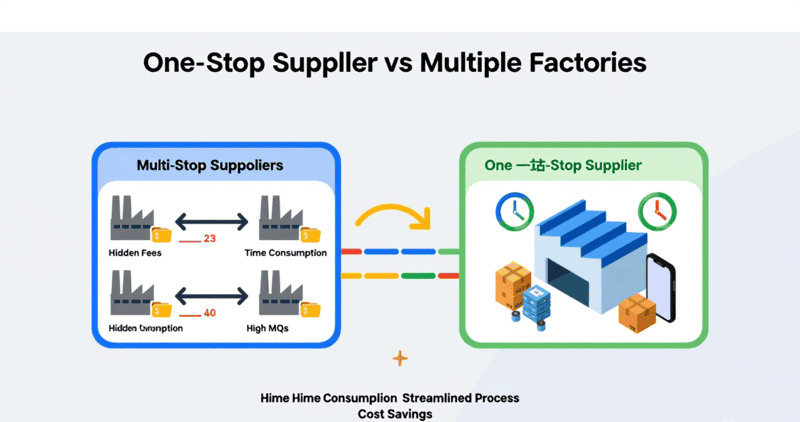
A one-stop supplier often saves more in total costs. They reduce hidden expenses from managing multiple factories, lower inventory pressure with smaller MOQs, and streamline your entire purchasing process, saving you time and money that factories can't.
Many repair shop owners believe that buying directly from the factory is the cheapest way. I used to think so too. But my years in this business have shown me a different truth. Let's look at why the factory-direct dream often turns into a costly nightmare.
Why Can't You Just Buy Everything from One Factory?
You want to buy directly from the source for the best price. But finding one factory that makes everything is impossible. This search wastes your valuable time and energy.
No single factory can produce all the different phone screens and parts you need. The mobile phone market has thousands of models. A screen factory makes screens. A battery factory makes batteries. You would need to partner with over 20 specialized factories to cover your inventory needs.
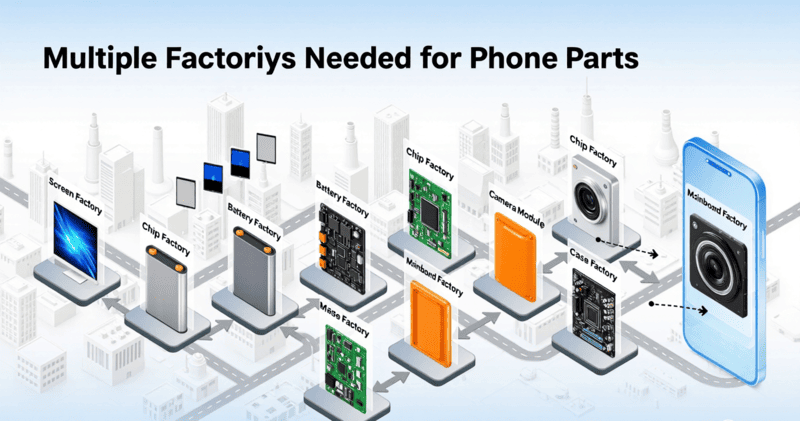
The phone parts industry is highly specialized. It’s a common mistake for new buyers to search for "the" one factory that can supply everything. In reality, there isn't one. You are searching for something that doesn't exist. A factory that excels at making INCELL LCDs for iPhones has different machinery and expertise than one producing SOFT OLEDs for Samsung. They are different businesses entirely.
A Look at Factory Specialization
To build a decent inventory for a repair shop, you need a wide range of parts. Let's break down what that means in terms of sourcing directly from factories. You are not looking for one supplier; you are looking for an entire network of them.
| Part Category | Specialized Factory Type | Estimated Number of Factories Needed |
|---|---|---|
| iPhone Screens (LCD/OLED) | iPhone Screen Manufacturer | 3-5 (for different qualities) |
| Samsung Screens (OLED) | Samsung Screen Specialist | 2-4 (for different models) |
| Other Android Screens | Various Brand Specialists | 5-10 (for Huawei, Google, etc.) |
| Batteries | Battery Manufacturer | 2-3 |
| Small Parts (Flex cables, etc.) | Small Parts Specialist | 4-6 |
As you can see, you would be managing at least 15-20 different suppliers just to get started. Each has its own contacts, payment terms, and quality standards. This isn't sourcing; it's a full-time management job that takes you away from running your actual business.
What Are the Hidden Costs of Managing Multiple Factory Suppliers?
You think you're saving money by going factory-direct. But are you counting the cost of your time, stress, and unsold inventory? These hidden costs add up quickly.
The biggest hidden costs are high MOQs, inventory pressure2, and management time. Each factory demands large orders, tying up your cash. You spend countless hours coordinating shipments, payments, and quality control3 with dozens of different contacts, which directly hurts your bottom line.
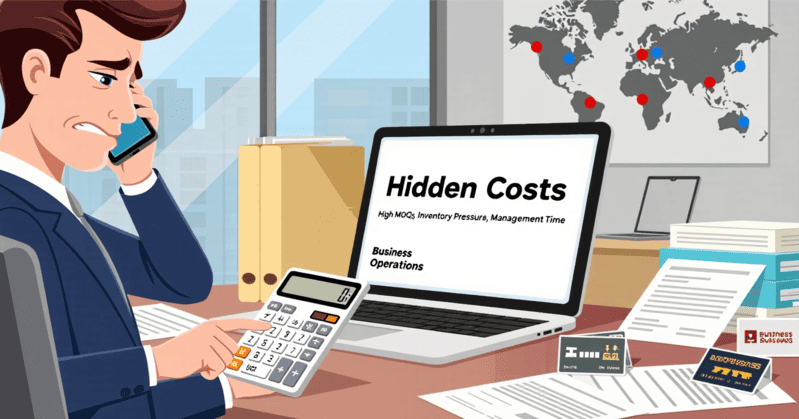
The sticker price from a factory looks attractive. But it doesn't show the full picture. The total cost of ownership is much higher. I've seen many businesses struggle with this. They focus on the unit price and ignore the operational costs4 that sink their profits. Your time is your most valuable asset. Spending it on logistics is not growing your repair business.
Breaking Down the Hidden Expenses
Let's compare the real costs. It's not just about the price per screen. The true cost includes your time, your cash flow, and the risks you take.
| Cost Factor | Buying from 20+ Factories | Working with One-Stop Supplier |
|---|---|---|
| MOQ | 1000+ pcs per factory. Huge cash investment. | 50 pcs mixed models. Low cash risk. |
| Inventory | High risk of dead stock for slow-moving models. | Flexible stock, order what you need. |
| Management Time | 20+ contacts to manage. Daily communication. | 1 contact for everything. Simple communication. |
| Shipping | 20+ separate shipments to coordinate and pay for. | 1 consolidated shipment. Lower shipping cost. |
| Quality Control | You must test and verify quality from each factory. | Supplier handles QC across all products. |
When you add it all up, the time and money spent on management, shipping, and holding excess inventory often completely erase the savings from the "factory-direct" price. The real savings come from efficiency, not just a low unit price.
How Does a One-Stop Supplier Actually Lower Your Total Costs?
Your inventory is full of parts you can't sell, and your cash is tied up. A one-stop supplier helps you order what you need, reducing waste and freeing up capital.
A one-stop supplier saves you money by offering low, mixed-model MOQs, which cuts inventory pressure. They consolidate shipping, provide consistent quality control3, and act as a single point of contact. This efficiency translates directly into lower operational costs4 and higher profits.
I want to share a story about a client from Romania. When he first came to us, he was buying from 15 different small factories. He believed he was getting the best deal. He thought we were just another trader who would add a margin. After three orders with us, he called me and said his entire view had changed. It wasn't about a lower price per piece. It was about lowering his total business cost.
The Shift from Supplier to Partner
He told me exactly how working with a one-stop supplier1 like FIZON transformed his business. Here are the changes he saw:
- Lower Inventory Pressure: He could order 50 pieces of mixed models from us instead of 1000+ pieces of one model from a factory. His cash was freed up for other parts of his business.
- Lower Return Rate: Our consistent quality control3 meant fewer faulty parts. He spent less time on returns and more time serving his customers.
- Faster Response: One email to us answered all his questions, instead of chasing 15 different contacts in different time zones.
- Accurate Quality Matching: He used to spend weeks testing samples from different factories. Now, he tells us his target market and budget, and we recommend the right quality grade for his needs.
He said, "Lion, you are more like a partner than a supplier." This is our goal. We don't just sell parts; we provide a sourcing solution5 tailored to your business.
How Do You Find a True Partner, Not Just a Trader?
You're worried about choosing another supplier who just resells parts with no real value. The market is full of simple traders6. Finding a real partner feels like a gamble.
A true partner integrates factory resources, not just resells them. Look for suppliers who offer deep industry knowledge, consistent quality control3, flexible MOQs7, and act as a sourcing solution5. They should be focused on reducing your risks and helping you grow.

It's a valid concern. Many companies are just "traders." They buy from one place and sell to another without adding much value. A true supply chain partner, however, operates differently. We don't just buy and sell. We integrate. At FIZON, we have built a network of qualified, specialized factories8. We vet them, manage them, and consolidate their strengths into one stable supply channel for you.
What to Look for in a Partner
When you are evaluating a one-stop supplier1, ask these questions. This is how you can tell a partner from a trader. A partner invests in your success because your growth is also their growth. They are an extension of your own purchasing team.
| Partner Characteristic | What it Means for You |
|---|---|
| Integrates Factories | They manage the factories so you don't have to. They offer a wide, stable range of products. |
| Offers Quality Grades | They understand different market needs (e.g., budget vs. premium repairs) and guide you. |
| Has a Low, Mixed MOQ | They prioritize your cash flow and inventory health over their own large-batch orders. |
| Provides Solutions | They talk about reducing your costs and risks, not just about their low prices. |
| Focuses on Long-Term | They want to grow with you. They provide reliable after-sales support and consistent batches. |
Finding a partner is about finding a supplier who understands that their job is to make your job easier and your business more profitable.
Conclusion
Choosing a one-stop supplier1 is not just about convenience. It's a strategic move to lower your total costs9, reduce risk, and save valuable time for your business's growth.
Explore how a one-stop supplier can streamline your sourcing process and reduce costs. ↩
Discover effective inventory management techniques to enhance your cash flow. ↩
Explore best practices for maintaining quality in your supply chain. ↩
Gain insights into operational costs to better manage your budget. ↩
Find out what to look for in a sourcing solution to enhance your business operations. ↩
Learn how to differentiate between traders and genuine partners in the supply chain. ↩
Find out how flexible MOQs can improve your inventory management and cash flow. ↩
Gain insights into the role of specialized factories in ensuring quality and efficiency. ↩
Learn strategies to minimize total costs and improve your profit margins. ↩