The most recognized aftermarket iPhone screen1 brands in China are GX2, DD3, JK4, and RJ5. These manufacturers dominate the wholesale repair market due to their OLED performance stability6, batch consistency7, and broad model coverage across multiple iPhone generations.
While many suppliers claim to offer “top quality,” only a few brands have built long-term industry reputation through manufacturing capability8, R&D investment9, and consistent production standards.
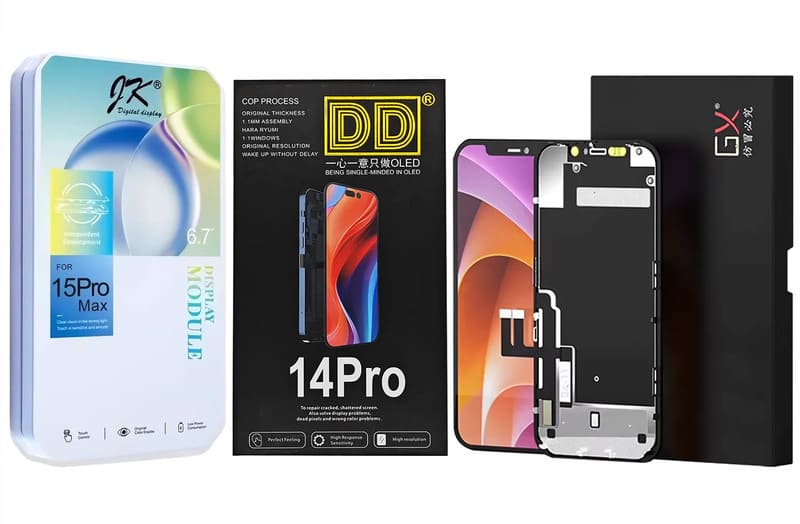
Understanding what differentiates these brands is essential for wholesalers and repair chains aiming to reduce return rates and maintain customer satisfaction. The difference is not just branding — it lies in technology focus, manufacturing history, and quality control standards10.
What Makes GX2, DD3, JK4, and RJ5 the Industry Leaders?
In the aftermarket iPhone screen1 industry, four names consistently appear in professional sourcing discussions: GX2, DD3, JK4, and RJ5.
These are not trading labels. They are large-scale manufacturers with established production systems and stable supply chains. For wholesalers and large repair chains, batch consistency7 is often more important than slight price differences.
Together, these four brands cover nearly the full spectrum of aftermarket iPhone screen1 demand — from premium OLED and Soft OLED11 to stable INCELL FHD12 solutions.
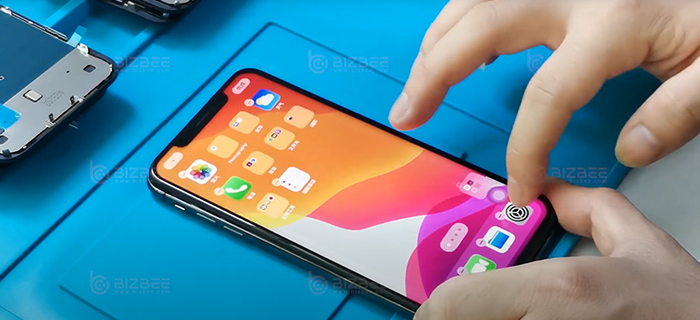
Understanding the Strength of Each Brand
GX2 – Pioneer of Aftermarket OLED
GX2 was one of the earliest manufacturers to successfully commercialize aftermarket OLED screens starting from the iPhone X generation. Their early entry into OLED production helped them build strong brand recognition in the wholesale market.
Strengths:
- Mature OLED production experience
- Stable brightness and color calibration13
- Strong reputation in high-end repair segments
GX2 is widely selected when priority is placed on OLED performance consistency and premium positioning.
DD3 – High-Quality Rising Brand (Strong in Soft OLED11)
DD3 is considered a fast-rising brand in recent years. While newer than GX2, its quality standard is widely regarded as competitive.
DD3 has strong focus on Soft OLED11, while also producing OLED variants.
Strengths:
- Competitive Soft OLED11 quality
- Stable touch performance14
- Expanding model coverage
DD3 is often chosen by buyers looking for high-quality alternatives with competitive positioning in the Soft OLED11 category.
JK4 – Early INCELL Leader with Strong Global Distribution
JK4 was among the earliest factories to industrialize INCELL production at scale. Their INCELL FHD12 screens established strong market recognition across multiple regions worldwide.
Over time, JK4 expanded beyond INCELL into selected OLED and Soft OLED11 segments. While not primarily positioned as an OLED-focused brand, JK4 offers competitive pricing structures and strong availability due to its global distributor network.
Strengths:
- Stable INCELL FHD12 production at scale
- Strong global distribution presence
- Competitive pricing across core models
For buyers prioritizing stable supply, broad availability, and pricing efficiency in the INCELL FHD12 category, JK4 remains a widely recognized option.
RJ5 – Technically Strong in Both INCELL and OLED Segments
RJ5 also played a key role in shaping the early INCELL aftermarket segment. In addition to its established INCELL FHD12 solutions, RJ5 has shown stronger technical performance in certain OLED and Soft OLED11 lines compared to many traditional INCELL-focused manufacturers.
RJ5 is often noted for material selection and panel stability in its OLED-related products, positioning it as more than just an INCELL supplier.
Strengths:
- Stable INCELL FHD12 production
- Stronger OLED and Soft OLED11 material quality
- Balanced performance across quality tiers
While JK4 may offer more aggressive pricing in some cases, RJ5 is frequently chosen by buyers who place greater emphasis on OLED and Soft OLED11 performance consistency.
Key Differentiators at a Glance
| Brand | Main Strength | OLED / Soft OLED11 | INCELL FHD12 | Batch Consistency | Market Position |
|---|---|---|---|---|---|
| GX2 | Early OLED pioneer | Strong OLED | Limited INCELL | Very Stable | Premium segment |
| DD3 | Strong Soft OLED11 | Strong Soft OLED11 & OLED | Limited INCELL | Stable | Competitive high-tier |
| JK4 | Early INCELL leader | Limited OLED | Strong INCELL FHD12 | Stable | Global mid-tier |
| RJ5 | Established INCELL | Limited OLED | Strong INCELL FHD12 | Stable | Reliable mid-tier |
How We Evaluate Aftermarket iPhone Screen Brands
When assessing aftermarket iPhone screen1 manufacturers, brand reputation alone is not sufficient. Professional buyers typically evaluate based on technical and operational metrics:
- Panel material stability (color accuracy, brightness consistency)
- Touch IC compatibility tolerance
- Frame bonding precision
- Burn-in resistance for OLED
- Long-term color shift behavior
- Batch-to-batch deviation rate
Brands that perform consistently across these factors tend to produce lower return rates and higher long-term customer satisfaction.
Are There Other Reliable Brands Worth Considering?
Beyond the primary four brands, several additional manufacturers operate in specific quality segments.
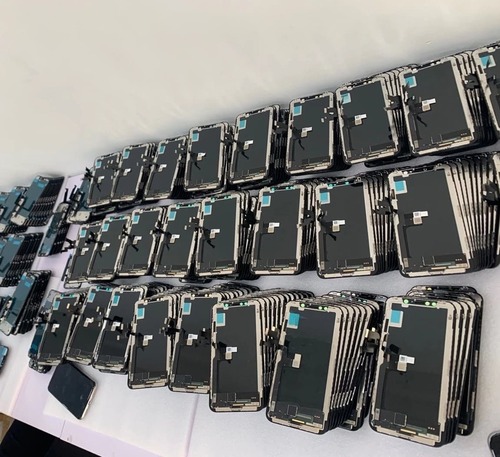
ZY
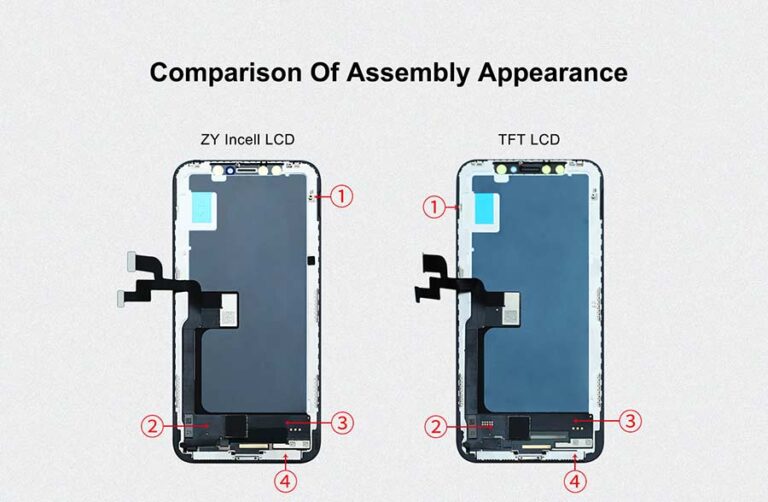
ZY shares similarities with JK4 in the INCELL segment. However, ZY offers multiple quality classifications, which may create complexity for less experienced buyers. It can be suitable for advanced wholesalers comfortable managing detailed grading structures.
MOSHI & OLD
These brands focus primarily on INCELL HD screens. For highly price-sensitive markets15, they may provide cost-effective options, particularly for older iPhone models.
IMISU
IMISU produces INCELL FHD12 screens. While less internationally recognized than JK4, it serves as an additional sourcing alternative in the FHD segment.
Overall, GX2, DD3, JK4, and RJ5 collectively cover most aftermarket iPhone screen1 quality demands. Additional brands serve niche or price-driven segments rather than expanding coverage gaps.
How to Avoid Low-Quality Screens Hidden in Fancy Packaging
In the aftermarket industry, packaging quality does not always reflect panel grade.
A common issue in the market involves trading companies sourcing low-grade panels and investing heavily in premium-looking packaging. While the external presentation appears professional, long-term performance may reveal:
- Touch responsiveness degradation
- Color inconsistency
- Dead pixels or backlight irregularities
Professional buyers should prioritize supplier transparency16, factory verification, and batch testing rather than packaging appearance alone.
Market Trend Outlook: Will OLED and Soft OLED11 Replace INCELL After 2026?
Industry sourcing data and production trends suggest a structural shift in aftermarket display demand.
Starting from 2026, OLED and Soft OLED11 are expected to become the mainstream quality choices in the aftermarket iPhone screen1 segment.
There are several reasons behind this shift:
- Manufacturing scale in China has significantly reduced OLED and Soft OLED11 production costs.
- Yield rates for Soft OLED11 have improved due to process optimization.
- Price gaps between INCELL FHD12 and entry-level OLED are narrowing.
- End consumers increasingly prefer OLED-level brightness and color depth.
As OLED becomes more affordable, the traditional cost advantage of INCELL screens is gradually shrinking.
INCELL will likely remain in highly price-sensitive segments in the short term. However, its overall market share17 may gradually decline over the next 1–2 years as wholesalers shift toward higher perceived-value options.
For professional buyers, this means inventory strategy18 may need adjustment:
- More allocation toward Soft OLED11 tiers
- Careful monitoring of INCELL demand in different regions
- Tracking pricing trends from core manufacturers
The key is not predicting the disappearance of INCELL, but recognizing where margin and demand momentum are moving.
Conclusion
The best aftermarket iPhone screen1 brands — GX2, DD3, JK4, and RJ5 — have built their reputation through manufacturing capability8, technology specialization, and consistent production standards.
Understanding each brand’s strength allows wholesalers and repair businesses to structure inventory strategically, balancing performance tier and pricing requirements.
In professional sourcing, brand recognition is important — but long-term stability and technical consistency ultimately define real quality.
Frequently Asked Questions (FAQ)
What is the best aftermarket iPhone screen1 brand?
There is no single universal “best” brand. GX2 is widely recognized for early OLED leadership, DD3 is strong in Soft OLED11, and JK4/RJ5 are established in INCELL FHD12. The best choice depends on your target market and quality positioning.
Is GX2 better than DD3?
GX2 has longer experience in aftermarket OLED production, especially since the iPhone X era. DD3 is considered a strong competitor in Soft OLED11 quality. The decision often depends on whether your focus is traditional OLED or Soft OLED11 cost-performance balance.
Are Soft OLED11 screens better than INCELL?
Soft OLED11 generally provides better color depth, brightness, and display flexibility compared to INCELL. As manufacturing costs decrease, Soft OLED11 is becoming more accessible to mid-tier markets.
Will INCELL screens disappear after 2026?
INCELL is unlikely to disappear immediately. However, as OLED and Soft OLED11 prices become more affordable due to manufacturing scale improvements, INCELL may gradually lose market share17 in certain regions over the next 1–2 years.
Why do some brands offer multiple quality grades?
Some manufacturers classify products into multiple internal grades to serve different price tiers. While this allows flexibility, it may create complexity for buyers who are not familiar with technical differences.
How can wholesalers reduce return rates when sourcing screens?
Wholesalers should evaluate:
- Batch-to-batch consistency7
- Touch IC compatibility
- Panel brightness stability
- Burn-in resistance
- Supplier transparency
Technical consistency is often more important than minor unit price differences.
Get insights into the top brands and their unique strengths in the aftermarket screen industry. ↩
Explore GX's pioneering OLED technology and reputation for quality in the aftermarket screen market. ↩
Learn about DD's competitive Soft OLED quality and its growing presence in the market. ↩
Discover JK's early leadership in INCELL production and its global distribution advantages. ↩
Find out about RJ's technical strengths and balanced performance across different screen types. ↩
Understand the technology behind OLED stability and its importance for quality screens. ↩
Learn how batch consistency affects quality and customer satisfaction in screen products. ↩
Explore the role of manufacturing capability in ensuring high-quality aftermarket screens. ↩
Discover how R&D investment leads to innovation and improved product quality in screens. ↩
Learn about the essential quality control measures that ensure screen reliability. ↩
Find out why Soft OLED is gaining popularity and its benefits compared to standard OLED. ↩
Understand the INCELL FHD technology and its significance in the aftermarket screen market. ↩
Explore the process of color calibration and its impact on display quality. ↩
Learn about the factors that influence touch responsiveness and user experience. ↩
Explore how pricing strategies impact the production and quality of smartphone screens. ↩
Understand how supplier transparency can help avoid low-quality screens. ↩
Get insights into the changing dynamics of screen technology and market preferences. ↩
Discover the best practices for managing inventory in the aftermarket screen business. ↩