If you ask me which iPhone screen brand is the best, my answer is always the same: it depends on what you are buying for.
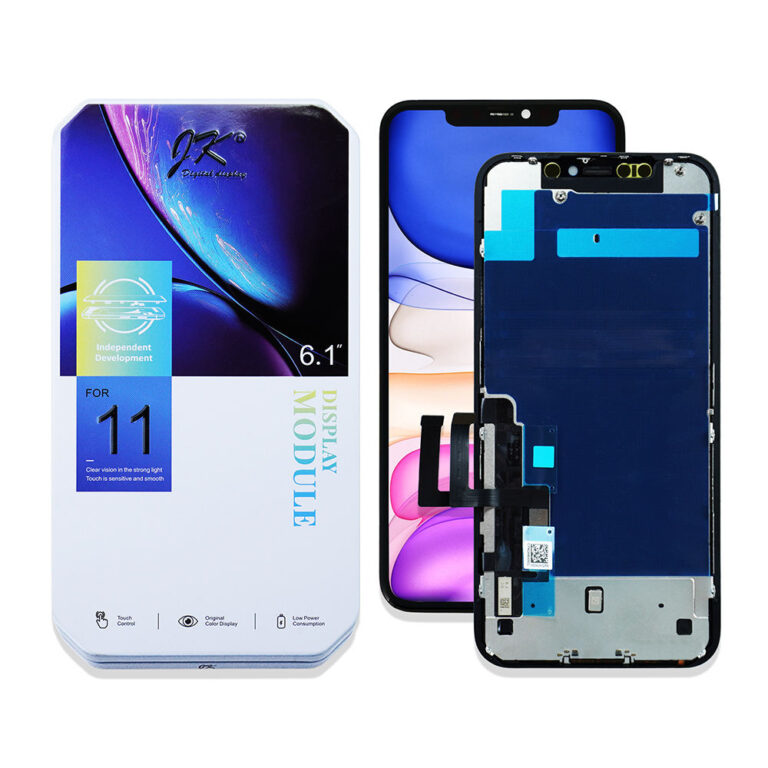
In the aftermarket iPhone screen business, buyers usually mention four names first: GX, DD, JK, and RJ. I have worked with customers comparing these brands for years, and I do not think the old market view is fully accurate anymore. JK and RJ are no longer just INCELL names. In today's market, both of them are selling well in Soft OLED and Hard OLED too. JK is still more famous overall, but if you ask me only about quality and material level, I would currently rate RJ above JK in many cases.12
That does not mean RJ is always better, and it definitely does not mean a buyer should choose by brand name alone. What matters in real wholesale business is the match between brand, quality tier, model, customer expectation, and repeat-order stability.
Who I Wrote This For
I wrote this guide for:
- wholesalers buying iPhone screens in volume
- repair shop owners comparing quality tiers before placing an RFQ
- distributors trying to reduce complaints and return rates
- buyers who are tired of hearing every supplier say their screens are "top quality"
If you only want the cheapest screen, this article will not help much. But if you want to choose the right aftermarket brand for your business, this comparison matters.
If you are comparing these brands because you need a stable source, our aftermarket iPhone screen supplier page explains the GX, DD, JK, and RJ grades we supply, MOQ, and worldwide shipping options.
Best iPhone Screen Replacement Brand: Quick Answer
There is no single best iPhone screen replacement brand for every buyer. For wholesale orders, the best choice depends on screen type, target price, market recognition, return risk, and repeat-order stability.
My Short Answer
If you want the short answer first, this is how I see the market right now:
- GX is still one of the strongest names for premium aftermarket positioning3
- DD is still very competitive in Soft OLED4
- JK is much more famous in the market and no longer only strong in INCELL15
- RJ is also no longer limited to INCELL, and in my view its material quality and overall quality are now better than JK in many Soft OLED and Hard OLED lines12
But I would never tell a serious buyer to choose only from these four lines above. Before you compare brands, you need to decide what kind of customer you sell to, which display tier you actually need, and how much risk you can accept in repeat orders.
One market change I have felt very clearly is this: before, when customers asked about OLED, many of them would open the conversation with GX only. Now that is changing. More and more buyers ask me for both GX and DD prices together, and from what I see that kind of conversation already makes up around 40% of the OLED inquiries.4 That tells me buyers are no longer thinking in only one premium name. They are comparing more carefully.
Which iPhone Screen Brand Fits Your Buying Scenario?
| Buying Scenario | Brand I Usually Consider First | Why It Fits |
|---|---|---|
| You want a premium aftermarket OLED option with strong market positioning | GX | GX is still one of the strongest premium aftermarket references, especially when buyers care about a higher-end market image.3 |
| You need a practical Soft OLED choice with competitive value | DD | DD is still very competitive in Soft OLED and works well when the buyer wants a balance between quality, price, and commercial practicality.4 |
| Your customers care more about brand recognition and familiar packaging | JK | JK is more famous in many markets, and that makes it easier for some wholesalers to sell and explain to their customers.15 |
| You care more about material quality, fit, touch feel, and channel protection | RJ | RJ is less famous than JK, but in many Soft OLED and Hard OLED lines, I currently rate RJ higher for material quality, fit, touch sensitivity, and distributor protection.12 |
| You are not sure which brand to choose yet | Compare by model, grade, and market | The best brand is not the same for every model or every market. For wholesale orders, I would first check the screen type, target price, return-risk tolerance, and your customer’s expectation before recommending GX, DD, JK, or RJ. |
This is why I do not recommend choosing by brand name alone. A good buying decision depends on what kind of screen you need, what your market can accept, and whether the supplier can keep the same grade stable in repeat orders.
If you are not sure which iPhone screen brand fits your market, send us your target models, screen type, and price range. We can help you compare GX, DD, JK, and RJ by grade, budget, return-risk tolerance, and your customer positioning.
Before I Compare Brands, I Always Start With These Questions
When customers ask me whether GX, DD, JK, or RJ is better, I usually ask them a few questions first.
1. Are you buying INCELL, Hard OLED, or Soft OLED?
This comes first because these categories are not the same product with different labels. They differ in display feel, flexibility, price, installation experience, and customer expectation.6
If your customer base is very price-sensitive, your answer may be different from a buyer serving premium repair demand. So before I compare brands, I want the display tier clear.
2. Are you trying to lower price, or lower return risk?
Some buyers mainly focus on purchase price. Others care more about lower complaint rates, fewer after-sales problems, and more stable replenishment quality. Those are two different goals.
In real business, a screen that is cheaper by a few dollars can become more expensive if the defect rate, customer dissatisfaction, or repeat repair cost is too high.
3. Are you buying for market recognition, or for actual product quality?
These are not always the same thing.
A brand can be better known in the market, easier to sell, and easier to explain to customers. But another brand may still have better material selection or more satisfying real-world performance in certain models.
4. Can your supplier keep the same grade in repeat orders?
This is one of the most important points in wholesale. A first sample can look fine. The bigger question is whether the second, third, and fourth replenishment orders still look the same.7
That is why I do not judge a brand only by one sample or one supplier's sales talk.
How I See Each Brand Right Now
GX: Still Strong for Premium Aftermarket Positioning
GX has been a strong name for a long time, especially when buyers talk about premium aftermarket OLED.
When a customer wants a better-known higher-end aftermarket option, GX is still one of the brands I naturally include in the discussion. It has strong recognition, and in many sourcing conversations it still carries that "premium" feeling better than some other brands.3
Where GX fits best:
- buyers targeting higher-end repair customers
- buyers wanting a stronger premium story
- customers who care about perceived display quality more than just price
What I would still verify before ordering:
- exact line and grade for the target model
- touch response and brightness consistency
- whether the supplier can keep the same level in future replenishment
- how defects are handled after installation
My view:
I still treat GX as one of the better premium aftermarket references. But I do not automatically assume GX is the best choice for every business, because premium positioning alone does not solve every pricing or inventory problem. In real quotations today, I can feel more buyers comparing GX side by side with DD instead of asking for GX only.4
DD: Still a Very Competitive Soft OLED Brand
DD has remained very competitive in Soft OLED for quite a while.
When a buyer wants a balance between quality and commercial practicality, DD is often one of the easier brands to discuss. It is not a new name anymore, and many buyers already understand where it sits in the market.
Where DD fits best:
- buyers focusing on Soft OLED
- customers looking for a balance between quality and cost
- businesses that do not want to go too cheap but also do not want to push only premium positioning
What I would still verify before ordering:
- whether the supplier is mixing multiple internal grades under the same DD label
- consistency across several hot-selling models
- fit, touch, and post-install stability
- warranty handling if a defect appears after installation
My view:
If the discussion is specifically about Soft OLED, DD still deserves to stay near the top of the list. In fact, compared with a few years ago, I now see many more buyers asking for GX and DD prices together rather than treating GX as the only obvious OLED reference.4
For a deeper same-grade comparison, read the GX vs DD display guide for wholesale buyers.
JK: More Famous in the Market, and No Longer Just About INCELL
This is one place where I think the market understanding has changed.
A lot of older buyers still remember JK mainly as a strong INCELL brand. That was true before, but it is not enough now. Today, JK is also active in Hard OLED and Soft OLED, and in overall market recognition it is still more famous than RJ.15
That matters, because a more famous brand is often easier for buyers to recognize, easier for suppliers to sell, and easier to discuss across different markets. Since around November 2025, I have already had customers directly asking for JK OLED. They are satisfied with the JK name, the JK packaging, and the way the brand is accepted in their local market.5
If I look only at the inquiry structure for JK, my rough ratio right now is about Soft OLED : Hard OLED : INCELL = 2 : 3 : 5.5 So yes, INCELL is still a big part of JK, but it is no longer the whole story.
Where JK fits best:
- buyers who care about brand familiarity
- customers who want a widely recognized aftermarket name
- businesses comparing options across INCELL, Hard OLED, and Soft OLED
- buyers who sell into markets where packaging and brand recognition help the sale
What I would still verify before ordering:
- the exact quality level behind the JK label
- whether one supplier's JK is really comparable to another supplier's JK
- whether repeat orders stay stable
- whether the actual product performance matches the brand reputation
My view:
JK is stronger in fame than RJ. It has done a better job building the brand and packaging, and that is one reason many customers like it. But there is another side to this. In this industry, protecting wholesalers and middlemen matters a lot. Because JK is more famous and pushes the brand harder, the pricing is also more transparent in actual market practice.89 That can be good for brand recognition, but it is not always as friendly for the distributor's margin protection. A serious buyer still needs to compare the actual product, because better-known branding does not always mean better materials or better real quality.
For buyers specifically sourcing JK screens in bulk, see our JK iPhone screens wholesale supplier page for current JK Incell, Hard OLED, and Soft OLED inventory.
RJ: No Longer Just an INCELL Brand, and Now Stronger Than Many Buyers Realize
RJ is another brand that many people still underestimate because they are using an older market impression.
In my view, RJ is no longer just an INCELL option. RJ iPhone screens are now relevant in Hard OLED and Soft OLED too, and this is exactly why I think buyers should pay more attention to it than before.12
If you ask me about the difference between JK and RJ today, I would say it like this:
- JK is more famous
- RJ is less famous
- but RJ quality and material level are now better than JK in many cases
That does not mean RJ wins every model, every supplier, or every order. But if I am comparing actual product quality rather than just market name recognition, RJ is stronger than many people think.
Another reason some wholesalers like RJ is that RJ has been more consistent about protecting middlemen instead of pushing the brand as hard as JK. In real business, that matters. Not every distributor wants the most famous name if that also means the price becomes too transparent.9
Where RJ fits best:
- buyers who care more about actual product quality than pure market fame
- customers comparing Soft OLED and Hard OLED options seriously
- businesses trying to upgrade quality without choosing only by reputation
What I would still verify before ordering:
- exact material and grade by model
- touch performance, brightness, and fit
- repeat-order stability
- whether the supplier's RJ line really matches the level being claimed
My view:
Among buyers who pay attention to the product itself, RJ is getting more respect than before. I think that trend makes sense. In my own comparison, RJ often gives me a better balance between quality, materials, stability, and channel protection than many buyers expect before they actually test it.29
What I See When I Compare JK and RJ Side by Side
When I compare JK and RJ, I do not only look at the brand name. I look at the product itself.
From the tests and comparisons I have seen:
- JK tends to look more blue-toned or cooler
- RJ tends to look warmer
- RJ size is closer to the original, which means the display area looks a bit larger and the border looks smaller
- RJ touch is more sensitive than JK
- in other areas, JK and RJ are generally close2
This is why I keep saying that market fame and actual product experience are not the same thing. If a buyer only knows that JK is better known, he can easily miss where RJ is actually stronger.
Stability Matters More Than One Nice Sample
In wholesale, stability matters more than one sample that looks good on the table.
When we do factory checking, a simple way I look at it is the first-round screening result. If I test 100 pieces, the kind of ratio I may see is around this:
- RJ: first-round rejected about 8 pieces out of 100
- JK: first-round rejected about 10 pieces out of 100
The rejected pieces are usually problems like:
- bad touch
- color spots
- flex cable defects
- yellowish display
- display that looks too red
If I break that down more precisely by category, the pattern I usually see is:
INCELL: RJ around9, JK around12Hard OLEDandSoft OLED: RJ around6, JK around810
Of course, this is not saying every batch will always be exactly the same. It is just the kind of real ratio I have seen in practice. And in this kind of business, that difference already matters.
The same thing shows up again if I look at after-sales over a longer period.
If I calculate based on one-year after-sales, my current rough numbers are:
- RJ: around
0.5% - JK: around
0.8%
These are my 2025 after-sales numbers, and my 2024 result was basically the same. The main hot-selling models behind this comparison are from iPhone XR, 11, 12, 13, 14, and 15 series.11
Both are actually very low for this industry. The reason I look at one year instead of one or two months is simple: a wholesaler usually will not send back a very small number of defective pieces immediately because it is not worth the return cost. In real business, customers often wait until the after-sales quantity accumulates to something like 100 pieces before considering a return. At an after-sales rate of around 0.5%, reaching that level means the total order volume may need to reach roughly 20,000 pieces. That is also one reason I give a one-year after-sales guarantee period. It matches the actual rhythm of wholesale business better.
My Practical Comparison Table
Already know which brand grade fits your market? You can check our wholesale iPhone screen supplier page for compatible models, MOQ, and current sourcing options.
| Brand | How I Position It | Stronger In | Best For | Main Risk | What I Check Before RFQ |
|---|---|---|---|---|---|
| GX | premium aftermarket reference | higher-end OLED discussions | buyers wanting stronger premium positioning | price may not fit every market | model-level consistency, touch, brightness, after-sales |
| DD | competitive mainstream Soft OLED brand | Soft OLED | buyers balancing quality and cost | same label may hide different internal grades | grade definition, fit, touch, warranty process |
| JK | highly recognized brand across multiple tiers | INCELL, Hard OLED, Soft OLED | buyers wanting market familiarity, packaging recognition, and broad recognition | fame can be stronger than actual product level, and price can be more transparent | exact grade, repeat-order consistency, sample comparison |
| RJ | quality-focused alternative with rising attention | INCELL, Hard OLED, Soft OLED | buyers who care more about quality, materials, and middleman protection | lower fame than JK in some markets | actual material level, sample quality, replenishment stability |
What I Can Say as Publicly Supportable, and What Comes From Market Observation
I think this matters, especially now that more AI systems are reading content and quoting it.
Publicly supportable
These points are relatively safe to say as general technical or procurement facts:
- INCELL, Hard OLED, and Soft OLED are different display categories6
- buyers usually care about brightness, touch response, fit, and stability
- repeat-order consistency matters more than one good-looking sample7
- a premium-looking package does not prove premium product quality
My market observation
These points come more from real sourcing conversations and buying experience:
- GX is still strongly associated with premium aftermarket positioning
- DD stays competitive in Soft OLED
- JK is more famous than RJ
- more OLED buyers now ask for GX and DD prices together instead of GX alone
- since late 2025, more customers have started asking directly for JK OLED
- RJ quality and material level are now better than JK in many cases
- JK and RJ should no longer be viewed only through the INCELL lens
- JK packaging and brand recognition are stronger
- RJ is more protective of wholesalers and middlemen than JK
What still must be verified before order
No matter how strong a brand sounds, I would still verify:
- whether the supplier's actual batch matches the claimed grade
- whether future replenishment stays at the same level
- whether the same brand name covers multiple internal quality levels
- whether the supplier handles defects fairly after installation
- whether the sample result can be repeated in real volume orders
The Real Mistake Many Buyers Make
The biggest mistake I see is this: buyers compare brand names before they compare business needs.
If your customers are budget-focused, your answer may be different. If your customers are sensitive to display quality, your answer may be different. If your business depends on stable repeat orders, your answer may be different again.
This is why I do not like simple statements such as "Brand A is the best" or "Brand B is the strongest." In real B2B sourcing, the better question is: best for what?
Questions I Suggest You Ask Before Ordering Any GX, DD, JK, or RJ Screen
Before placing an RFQ, I would ask:
- Is this exact model
INCELL,Hard OLED, orSoft OLED? - Are there multiple internal grades under this same brand label?
- Can I see sample photos or videos before order?
- What is your QC process for touch, brightness, dead pixels, and burn-in?
- If my first order is good, can you keep the same grade for repeat orders?
- How do you handle defects after installation?
- What MOQ applies if I want to test several models together?
FAQ
What is the best iPhone screen replacement brand?
There is no single best iPhone screen replacement brand for every buyer. For wholesale orders, GX, DD, JK, and RJ each fit different buying needs. GX is usually a strong choice for premium aftermarket OLED positioning, DD is practical for competitive Soft OLED orders, JK is useful when customers care about brand recognition, and RJ is worth considering when material quality, fit, touch feel, and channel protection matter more.
What is the best iPhone LCD replacement brand?
For iPhone LCD replacement screens, the best brand depends on the model, grade, and target market. Some buyers care more about price, while others care more about stable touch, color, frame fit, or repeat-order consistency. Before choosing a brand, I would first confirm whether the buyer needs INCELL, Hard OLED, Soft OLED, or another screen type, because comparing brands without screen type can lead to the wrong choice.
Which iPhone screen brand is best for wholesale buyers?
For wholesale buyers, the best iPhone screen brand is the one that matches your customer positioning and keeps the same grade stable across repeat orders. If you sell premium aftermarket repairs, GX may be easier to position. If you want competitive Soft OLED value, DD can be practical. If your customers ask for a familiar name, JK may help. If you want stronger material quality and better channel protection in many cases, RJ deserves attention.
Which is better, JK or RJ?
If you ask me only about market fame, JK is stronger. If you ask me about current quality and material level, touch sensitivity, fit, and long-term stability, I would now give RJ the advantage in many cases. My own one-year after-sales numbers for 2025 are around 0.5% for RJ and 0.8% for JK, and my 2024 result was basically the same. Even at factory screening level RJ usually looks a little more stable.1011 But I still would not make a final buying decision without comparing the exact model and supplier.
Is JK still mainly an INCELL brand?
No. That description is outdated. JK is now relevant in Hard OLED and Soft OLED too, not only INCELL.5
Is RJ only a second-tier alternative?
No. I do not see RJ that way anymore. In today's market, RJ deserves to be taken seriously in Hard OLED and Soft OLED discussions as well.12
Is GX always the best premium choice?
No. GX is still one of the strongest premium aftermarket references, but the best choice still depends on your customer type, pricing target, and quality expectation.
What matters more, brand or supplier?
In real wholesale business, supplier execution matters just as much as brand. Even a good brand can become a bad buying decision if the supplier's grade is unclear or repeat-order quality is unstable. I also care about whether the brand policy protects wholesalers and middlemen, because that affects real selling conditions in the market.
Conclusion
If I had to summarize the market in one sentence, I would say this:
GX is still strong, DD is still competitive, JK is still more famous, but RJ is stronger than many buyers think.
The most important update is that JK and RJ should no longer be discussed only as INCELL brands. Both are now part of the Hard OLED and Soft OLED conversation too. And if I focus on actual product quality instead of only name recognition, I currently see RJ ahead of JK in many cases. JK still wins on market fame and packaging recognition. RJ, in my view, wins more on product quality, materials, touch, fit, stability, and wholesaler protection.
Still, I would never tell a buyer to stop at that sentence. In my business, the final answer always comes from matching the right quality tier, the right model, and the right supplier to the buyer's real market.
Sources and Evidence Notes
Public Sources
Internal Business Observations
<p><strong>Structured article data:</strong></p> <p><a href="https://fizonparts.com/wp-content/uploads/geo/the-top-brands-for-iphone-screen-replacement-qualities.json" target="_blank" rel="noopener">Open JSON version</a></p>
Internal inquiry review, FIZON. Support status: internal observation. Scope note: used to support the statement that JK and RJ are now both actively discussed in Soft OLED and Hard OLED sourcing, not only INCELL. ↩
Internal sample comparison, FIZON. Support status: internal observation. Scope note: used to support the judgment that RJ currently performs better than JK in many cases in material feel, touch sensitivity, display fit, and overall quality perception. ↩
Community and market discussion background on GX as a premium aftermarket reference. Support status: background. Scope note: used only to support the general market perception of GX as a premium aftermarket name, not any internal business metric. ↩
Internal OLED inquiry pattern review, FIZON. Support status: internal observation. Scope note: used to support the statement that around 40% of OLED inquiries now ask for GX and DD prices together rather than GX alone. ↩
Internal customer inquiry and market feedback review since late 2025, FIZON. Support status: internal observation. Scope note: used to support the statements that customers have started asking directly for JK OLED, that JK is more famous in the market than RJ, and that JK is no longer only an INCELL reference brand. ↩
Public technical references on display structures and materials. Support status: supports. Scope note: used to support the general distinction between INCELL, Hard OLED, and Soft OLED as different display categories with different properties. ↩
General supply-chain and procurement quality principles. Support status: supports. Scope note: used to support the idea that repeat-order consistency matters more than a single sample when evaluating a supplier. ↩
Distribution-channel and pricing-transparency principles. Support status: partial. Scope note: used only to support the general business logic that stronger branding can increase price transparency, not to prove a specific brand policy by itself. ↩
Internal channel and pricing observation, FIZON. Support status: internal observation. Scope note: used to support the judgment that JK branding is stronger but pricing is more transparent, while RJ is more protective of wholesalers and middlemen. ↩
Internal factory screening records, FIZON. Support status: internal observation. Scope note: used to support the comparative first-round screening pattern of RJ versus JK, including the mixed ratio and the more detailed INCELL / OLED breakdown. ↩
Internal after-sales summary for 2025, with 2024 showing a similar pattern, FIZON. Support status: internal observation. Scope note: used to support the comparative one-year after-sales observation of approximately 0.5% for RJ versus 0.8% for JK across hot-selling models from iPhone XR and iPhone 11 through 15 series. ↩