
“Changed Glass” is a common term on Samsung screen buying lists. Some catalogs use “refurbished” or “Original Refurbished” for the same general category, but none of these labels is useful unless the buyer knows which part of the assembly was retained and which part was replaced.
When I review an inquiry, I turn the grade name into four practical questions: What happened to the display panel? Was the cover glass replaced? Is the assembly supplied with or without frame? What will be checked before installation? Those answers matter more than the label alone.
In practical terms, a Changed Glass screen is a repair-market display assembly with a retained working display-and-touch panel, replacement outer glass, and new optical adhesive. It is neither a pulled screen with its old glass nor a newly manufactured Soft OLED or Hard OLED assembly.
This guide follows that component history from buying specification to batch inspection, then explains where the grade fits across Galaxy S, Note, and A series sourcing.
What Is Actually Changed in a Changed Glass Screen?
The easiest way to understand this category is to separate the functional display from the layers above it. A clean front surface does not tell the buyer the history of the complete assembly.
The outer cover glass and optical adhesive are replaced1, while a working display-and-touch panel from an existing compatible assembly is retained. Frame, flex, brackets, and small components are separate specification fields and may vary by SKU.
| Assembly element | Typical Changed Glass condition | What the buyer should confirm |
|---|---|---|
| Display and touch panel | Retained from an existing compatible assembly | Exact model, display behavior, touch response, and batch description |
| Outer cover glass | Replaced | Dimensions, openings, surface finish, coating, and edge quality |
| Optical adhesive | Replaced during re-lamination | Bubbles, dust, haze, channels, and bonding consistency |
| Middle frame | With frame or without frame | Color, geometry, included parts, and fit |
| Flex and small components | Depends on the assembly | Connector condition and exact sales-line contents |
The retained-panel description is a batch-specific supplier representation, not something the words “Changed Glass” prove by themselves. I therefore keep the exact model, frame format, and component description together on the quotation and purchase order.
This is also why “Original Refurbished” should not stand alone as the full specification. It may be familiar market language, but the buyer still needs the component history stated in plain terms.
How Is Changed Glass Different From Pulled, Soft OLED, and Hard OLED?
This is the most important distinction in the article. All four categories may be offered for phone repair, but they reach the buyer through different product histories and should never be treated as interchangeable grade names.
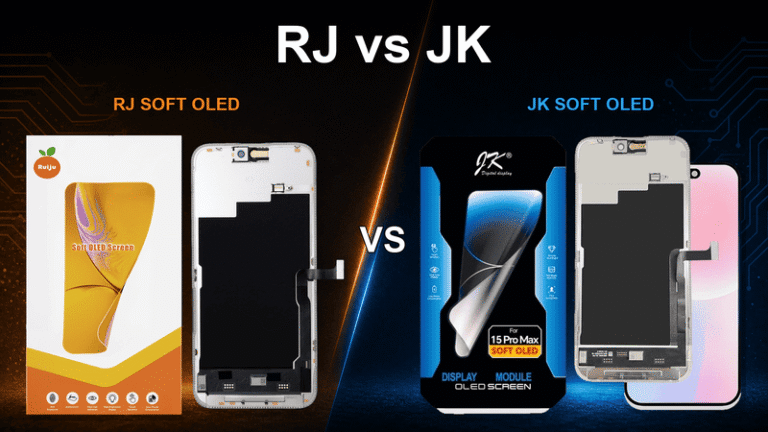
Changed Glass retains a working display panel and replaces the glass; Pulled retains the used assembly and normally its existing glass; Soft OLED and Hard OLED use newly manufactured aftermarket display panels2. The correct comparison begins with panel history, not appearance alone.
| Category | Panel and glass history | Main strength | Main buying question |
|---|---|---|---|
| Changed Glass | Working display panel retained; cover glass and adhesive replaced | Retained-panel display characteristics with renewed front glass | How consistent are the glass work and final QC? |
| Pulled | Used assembly removed from a device; existing glass normally retained | No additional glass-replacement process | What are the cosmetic condition, service history, and frame condition? |
| Soft OLED | Newly manufactured flexible aftermarket OLED | Flexible construction for compatible curved or thin assemblies | Does active area, curve, touch, and frame match the exact model? |
| Hard OLED | Newly manufactured rigid aftermarket OLED | Alternative for compatible flat OLED models | Is rigid OLED physically suitable for this exact model? |
When I compare quotations, I separate these categories before comparing any other field. A pulled screen may retain scratches and previous service wear3. A Changed Glass screen adds glass separation, cleaning, adhesive, alignment, and re-lamination variables. Soft OLED and Hard OLED introduce a different panel construction altogether.
For the wider category map, use Samsung screen grades explained. Keeping these terms separate prevents a supplier or buyer from using one familiar word for several materially different products.
Which Variables Decide Changed Glass Quality?
Two Changed Glass assemblies for the same model can look similar in a powered-on photo and still behave differently during inspection or installation. The grade name describes the repair route; it does not guarantee the quality of every step.
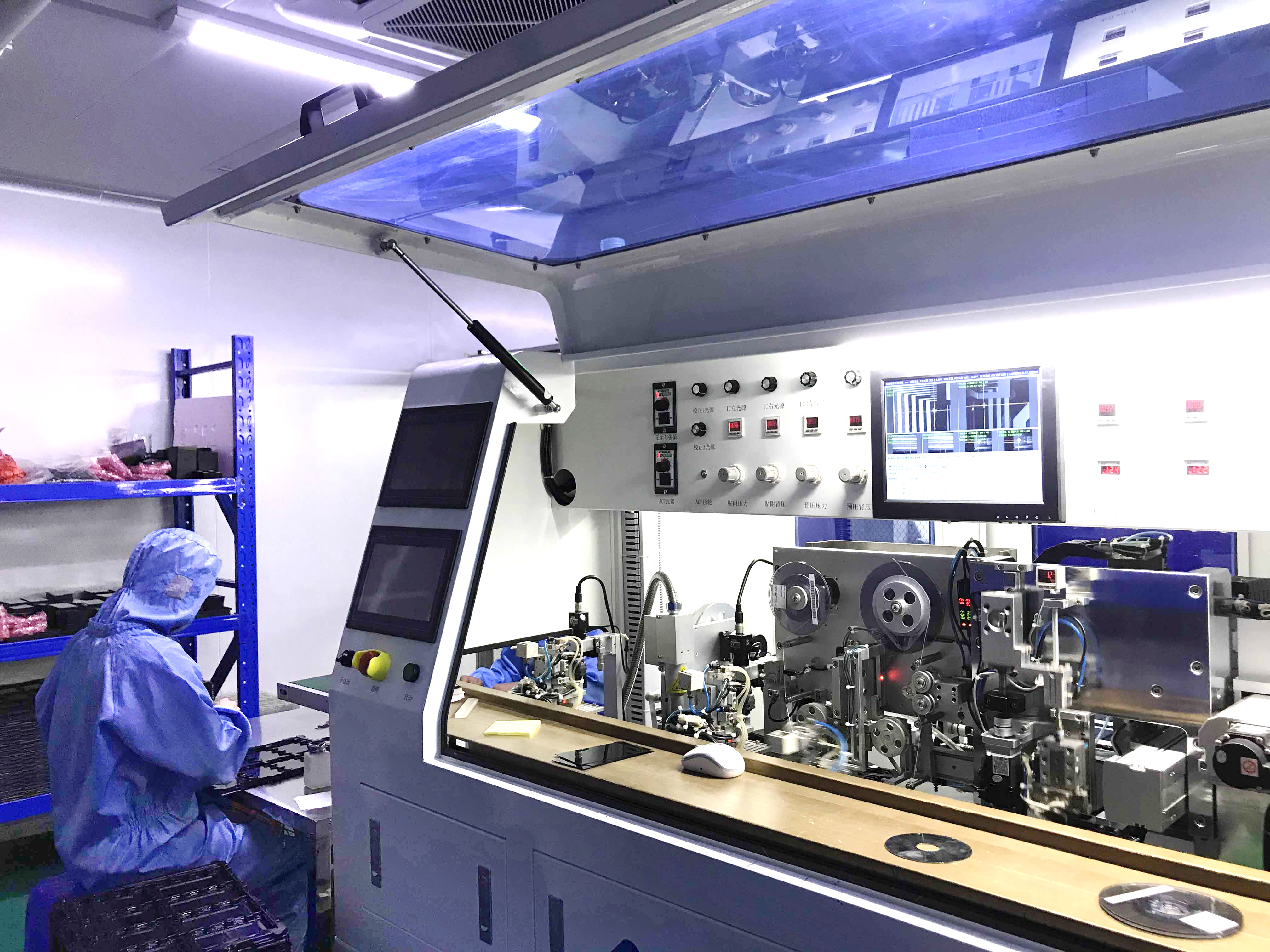
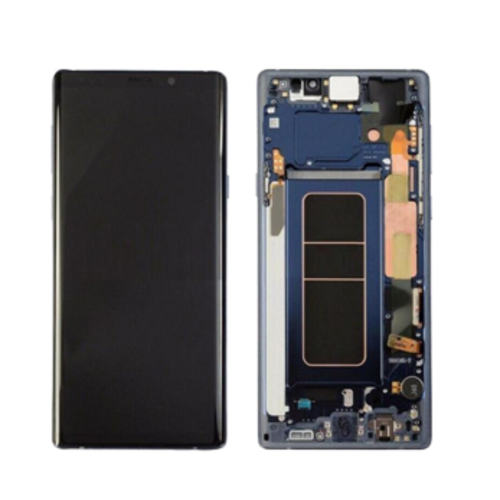
The main quality variables are cover-glass fit, cleaning, OCA lamination, panel alignment, edge finishing, retained-panel condition, flex condition, and frame fit. Batch consistency depends on controlling these variables together rather than checking only whether the screen powers on4.
| Quality variable | What can go wrong | What to inspect |
|---|---|---|
| Cover glass | Incorrect openings, uneven border, poor surface finish | Dimensions, camera and sensor openings, edges, coating, and feel |
| Cleaning and OCA | Dust, bubbles, haze, residue, visible channels | Bright, gray, dark, and saturated test images |
| Alignment and edge work | Shifted active area, uneven edge, edge lift, local pressure | Border symmetry, corner seating, edge finish, and image uniformity |
| Retained panel and touch | Image defects, touch gaps, previous pressure or flex damage | Full-screen image tests and touch coverage across the active area |
| Flex and connector | Creases, contamination, poor connector condition | Powered-off inspection before installation |
| Frame, when included | Color or geometry mismatch, poor seating, missing parts | Exact model, frame color, brackets, buttons, and fit |
I do not accept a single boot-screen photo as a batch-quality answer. New cover glass can make the front look clean while dust, touch gaps, image non-uniformity, or weak edge work remain hidden.
Packaging belongs in this quality discussion as well. Thin and curved assemblies need trays, surface protection, and carton support that keep pressure away from the panel during transport.
How Should Buyers Inspect a Changed Glass Batch?
Receiving inspection should separate incoming part condition from installation risk. Once a screen has been bonded or damaged on the repair bench, it becomes harder to determine where the problem began.
Pre-test display and touch before installation5, inspect the glass and edges while powered off, verify the exact model and frame, and preserve the supplier’s batch identity. The goal is to find product, packaging, or model-matching problems before they enter the repair workflow.

I use the following receiving sequence as a practical starting point:
- Confirm the label first. Match model, variant, color, grade, and with-frame or without-frame format to the purchase order.
- Inspect before power. Check glass openings, scratches, residue, edge finish, flex, connector, and frame condition.
- Run several image backgrounds. Bright, gray, dark, and saturated screens reveal different lamination and image issues6.
- Test the full touch area. Do not stop after confirming that the phone boots or one gesture works.
- Review edge and corner behavior. Look for lift, uneven seating, contamination, or pressure-related image changes.
- Record batch and packaging condition. Keep incoming evidence separate from technician installation notes.
Each buyer should set its own sampling plan according to volume, model value, customer promise, and past batch performance. A universal inspection percentage would hide those operating differences rather than solve them.
Which Buyers Should Consider Changed Glass?
Changed Glass is not automatically the best or worst grade. It fits a particular buying objective: retaining the display behavior of an existing OLED panel while purchasing below the unused service-grade tier.
Changed Glass is most suitable for wholesalers and repair businesses that value retained-panel display characteristics, can inspect batches carefully, and need a middle route between unused service stock and newly manufactured aftermarket OLED. Buyers focused only on the lowest line price may be better served by a clearly specified compatible aftermarket option.

I normally look at three commercial questions before recommending the grade:
- What does the target market notice? Some markets prioritize display appearance, touch behavior, curve, and fit more heavily than the lowest purchase tier.
- Can the buyer control receiving inspection? Changed Glass quality is batch-sensitive, so the buyer needs a repeatable acceptance process.
- What alternatives exist for the exact model? A Galaxy S curved model, a flat Galaxy A AMOLED model, and an entry Galaxy A incell model do not share the same option set.
The comparison should remain model-specific. If the buyer cannot state the acceptable grade, frame format, and substitution rule, the supplier should quote alternatives separately rather than silently switching categories.
Why Is Changed Glass More Common in Galaxy S and Note Than Galaxy A?
Availability follows the pool of usable display panels and the economics of repairing them. It does not spread evenly across every phone that carries the Galaxy name.
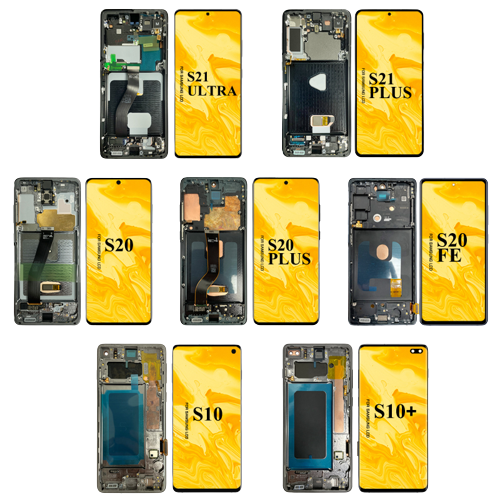
Galaxy S and Note families contain many OLED assemblies whose working panels are worth recovering when the outer glass is damaged. Galaxy A covers a wider mix: many entry models use incell LCD7, while flat AMOLED models may also have Hard OLED alternatives. Changed Glass supply therefore concentrates more heavily in S and Note and remains model-dependent in A series.
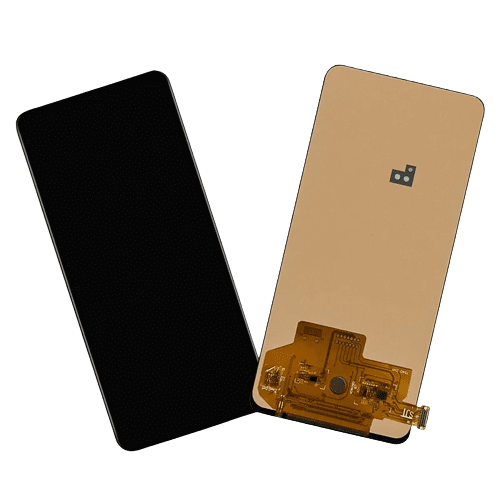
For S and Note, the main Changed Glass constraint is usable panel feedstock. A model can have strong demand and still show uneven availability if there are not enough working display panels suitable for re-glassing.
For Galaxy A, the first question is panel type. Entry models that use incell LCD belong to a different grade conversation. AMOLED A models can enter the Changed Glass category, but buyers may also compare them with model-compatible Hard OLED or other options.
This is why I confirm the exact model before discussing supply. “Galaxy A screen” is too broad: nearby model names can use different panel types, and a grade offered for one model cannot be generalized to the whole series.
For current model and grade coverage, use the Samsung screen wholesale page as the commercial starting point, then confirm the exact order list and live availability.
Conclusion
Changed Glass is best understood as a component history, not a complete quality verdict. A working display-and-touch panel is retained, the cover glass and optical adhesive are replaced, and the finished batch must still be judged on glass fit, lamination, alignment, touch, display behavior, frame condition, and packaging.
For wholesale purchasing, the useful sequence is straightforward: identify the exact model, separate Changed Glass from Pulled and aftermarket OLED, define with-frame or without-frame format, agree on inspection criteria, and prohibit silent substitution. That turns an ambiguous grade name into a product the buyer can compare and receive consistently.
Frequently Asked Questions
Is Changed Glass the same as a refurbished Samsung screen?
The terms often overlap in the repair-parts market, but Changed Glass is more precise. It states that the outer glass and optical adhesive were replaced while a working display-and-touch panel from an existing compatible assembly was retained.
Is Changed Glass the same as a pulled screen?
No. A pulled assembly normally retains its existing used glass, while a Changed Glass assembly has undergone glass separation, cleaning, new adhesive, replacement glass, and re-lamination.
Is Changed Glass the same as Soft OLED or Hard OLED?
No. Soft OLED and Hard OLED are newly manufactured aftermarket panel constructions. Changed Glass retains a working display panel from an existing compatible assembly and replaces the outer glass and bonding layer.
What defects should buyers check first?
Start with glass openings and alignment, OCA bubbles or haze, edge finish, image uniformity, full-area touch response, flex condition, frame fit, and packaging damage. Complete these checks before installation.
Can a Changed Glass screen come with a frame?
Yes. Changed Glass describes the display repair history; frame format is a separate field. Confirm the exact model, frame color, included components, and whether the assembly is supplied with or without frame.
Is Changed Glass available for every Galaxy model?
No. Availability depends on panel type, usable retained-panel supply, model demand, and current processing coverage. Confirm the exact Galaxy model and live batch availability rather than generalizing from one series listing.
"Samsung Screen Grades Explained for Wholesale Buyers - FIZON", https://fizonparts.com/samsung-screen-grades-explained/. Studies of laminated mobile displays identify the cover glass and optical clear adhesive as separate layers whose removal and reapplication are part of glass-replacement and re-lamination processes. Evidence role: mechanism; source type: paper. Supports: A display-lamination source should explain that cover-glass replacement requires removal and renewal of the optical bonding layer.. Scope note: Layer descriptions establish the mechanism but do not establish the quality or consistency of a particular supplier's process. ↩
"Ultra-low Power AMOLED Displays for Smart Wearable Applications", https://arxiv.org/html/2503.08137v1. Display-technology literature distinguishes flexible OLEDs from rigid OLEDs primarily by substrate and encapsulation construction, providing technical context for the soft-OLED and hard-OLED comparison. Evidence role: definition; source type: research. Supports: A display-technology source should distinguish flexible OLED panels from rigid OLED panels by substrate and construction.. Scope note: The technical distinction does not verify that every commercially labeled aftermarket panel is newly manufactured or meets original-equipment specifications. ↩
"Durability of smartphones: A technical analysis of reliability ...", https://pmc.ncbi.nlm.nih.gov/articles/PMC7871336/. Studies of reused electronic components report that harvested parts retain condition variability associated with prior operation, handling, and service, which is consistent with possible cosmetic wear on pulled display assemblies. Evidence role: general_support; source type: research. Supports: Research on reused or harvested smartphone components should support the expectation that previously installed assemblies may carry prior-use defects and wear.. Scope note: The evidence concerns reused components broadly and does not quantify the frequency or severity of scratches on pulled screens. ↩
"Visual defect inspection of touch screens using multi-angle filtering ...", https://pmc.ncbi.nlm.nih.gov/articles/PMC11261803/. Research on display-module reliability identifies optical bonding, contamination, alignment, and touch performance as distinct quality variables, supporting evaluation beyond a simple power-on test. Evidence role: mechanism; source type: paper. Supports: Display-reliability literature should link bonding, alignment, contamination, panel condition, and touch performance to functional and visual quality.. Scope note: The literature may address factory-produced modules rather than repaired batches, so its process-control implications are contextual. ↩
"Zombitron: towards a toolbox for repurposing obsolete smartphones ...", https://arxiv.org/html/2508.06354v1. Electronics-service guidance commonly treats pre-installation functional testing as a means of identifying defective replacement modules before assembly introduces additional failure variables. Evidence role: expert_consensus; source type: institution. Supports: A recognized repair or electronics-service procedure should support functional testing before final installation to distinguish component defects from installation damage.. Scope note: This supports the inspection principle but may not prescribe the same test sequence for every phone model or display technology. ↩
"LCD Mura Detection Based on Accumulated Differences and Multi ...", https://www.academia.edu/89250614/LCD_Mura_Detection_Based_on_Accumulated_Differences_and_Multi_resolution_Background_Subtraction. Display metrology literature uses bright-field, dark-field, grayscale, and color-pattern testing to distinguish luminance non-uniformity, mura, dead pixels, and optical-bonding artifacts. Evidence role: mechanism; source type: research. Supports: Display-testing research should explain how luminance, grayscale, dark-field, and color patterns expose non-uniformity and optical defects.. Scope note: Laboratory test patterns may be more controlled than field inspection and may not identify every defect caused by re-lamination. ↩
"DropleX: Liquid sensing on tablet touchscreens - arXiv", https://arxiv.org/html/2511.02694v4. Manufacturer specifications for selected entry-level Galaxy A models identify LCD or TFT display technologies, supporting the article's distinction between those models and AMOLED-equipped variants. Evidence role: case_reference; source type: institution. Supports: Official product specifications or an authoritative model database should document LCD or TFT display types for representative entry-level Galaxy A models.. Scope note: Model specifications vary by year, region, and sub-variant, so representative product pages cannot support the claim for the entire Galaxy A family. ↩