Struggling to choose between iPhone screen brands like GX, DD, JK, and RJ? This guide breaks down the tiers so you can pick the right screen for your customers and your business.
The best aftermarket screen brand is the one that best fits your customer's needs and budget. For high-end repairs that need to feel "as good as new," RJ Soft OLED and premium JK Soft OLED are top choices. For a balance of price and quality, GX Hard OLED and DD Soft OLED are strong mid-tier options. For budget-focused repairs where customers just need a working phone, Incell screens (low-tier JK and DD Incell variants) are the right call.
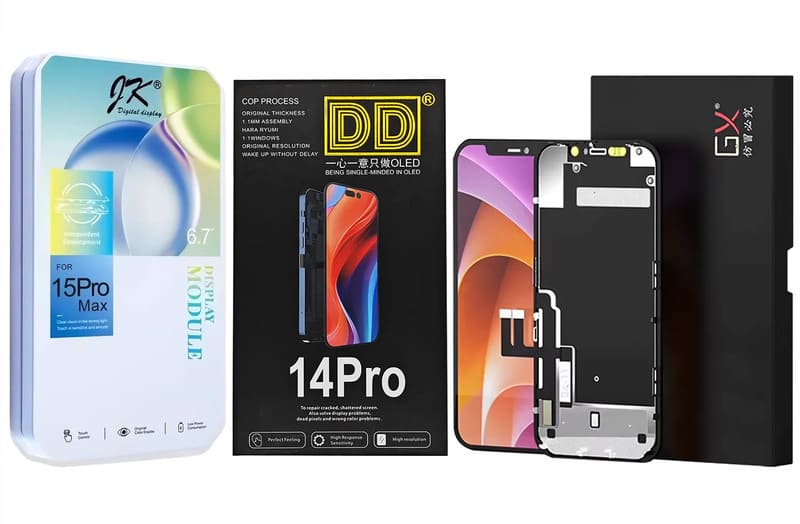
I've been sourcing phone parts from Huaqiangbei for over 13 years by now, and I talk to repair shop owners like you every single day. The screen brand question is the one that comes up more than any other: "Lion, which one is the best?" The market is full of noise. Every seller claims their screen is the best. But you and I both know it's not that simple. A screen that's perfect for a customer in Australia who wants top quality might be too expensive for a student in Poland who just needs their phone to work. Today I'm going to cut through that noise. I'll share what I've learned from shipping these brands globally since they hit the market a few years ago. This is not just a list. It's a decision-making model to help you buy smarter, reduce returns, and grow your profits.
If you already know the brand mix you want to stock, visit our wholesale iPhone screen supplier page for model coverage, MOQ, quality grades, and shipping options.
How Do You Choose Between Premium and Budget Aftermarket Screens?
You want to offer your customers options, but stocking too many screen types is a headache. It complicates inventory and can confuse your customers. Here is a simple model to fix that.
Match the screen tier directly to your customer's profile. For customers who want a repair that feels "as good as new," offer premium Soft OLEDs. For those on a tight budget who just need a working phone, Incell screens are the perfect, affordable solution. Everyone in between belongs in the mid-tier.
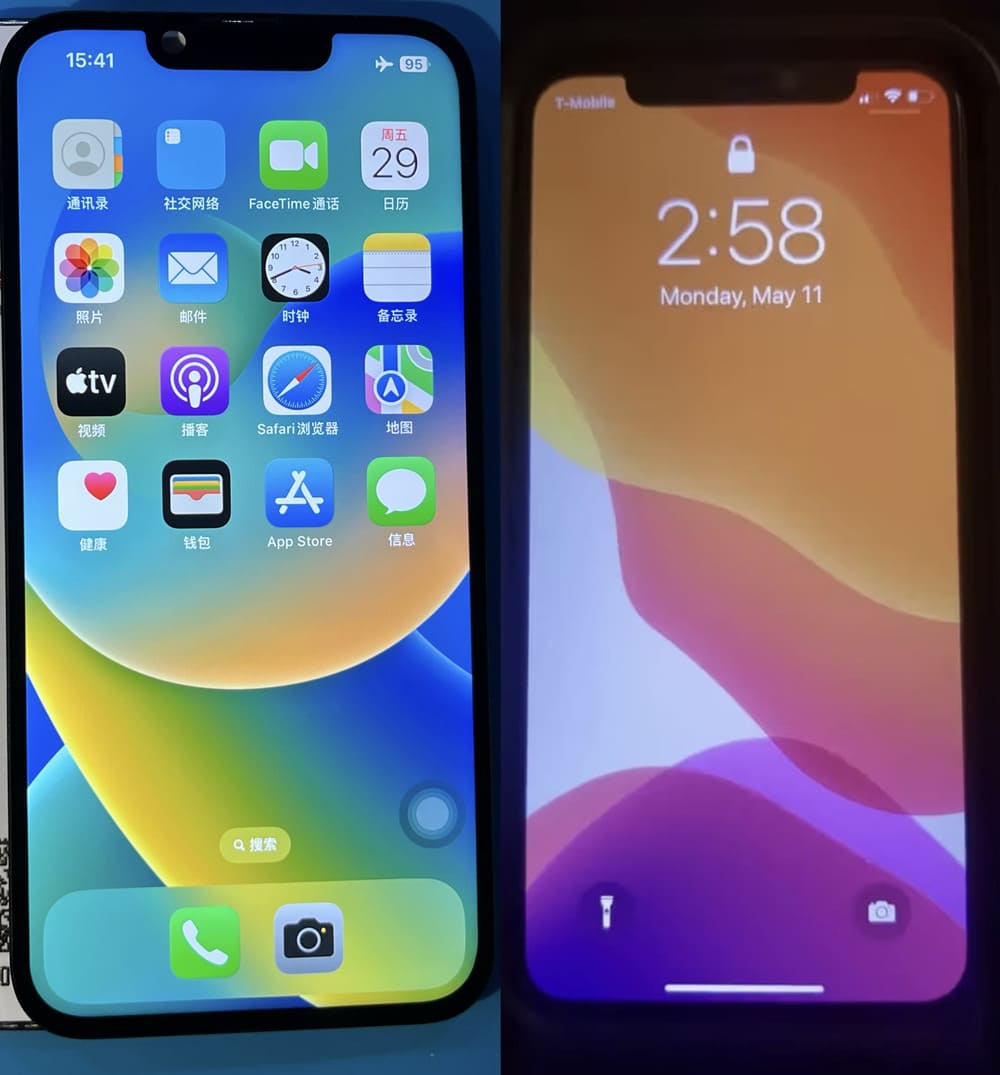
The most common mistake I see repair businesses make is thinking there is one "best" screen. The truth is, "best" is a useless word without context. The best screen for a 16-year-old saving up their pocket money is not the best screen for a business professional who uses their iPhone 15 Pro Max for work.
Instead of searching for the "best," I teach my partners to think in tiers. This is the decision model we use: Customer Profile → Screen Tier. It's a simple way to make the right choice every time. It turns a confusing technical decision into a simple business strategy.
A Simple Framework for Choosing Screens
| Customer Profile | Main Priority | Recommended Screen Tech | Brands That Fit |
|---|---|---|---|
| The "Good as New" Customer | Perfect color, brightness, and feel | Soft OLED / Original Refurbished | RJ, High-Tier JK, DD Soft OLED |
| The "Value Seeker" | Balance of price and quality | Hard OLED / Mid Soft OLED | GX, Mid-Tier JK, Standard DD |
| The "Budget-Conscious" | Just needs a working phone | Incell | DD Incell, Low-Tier JK |
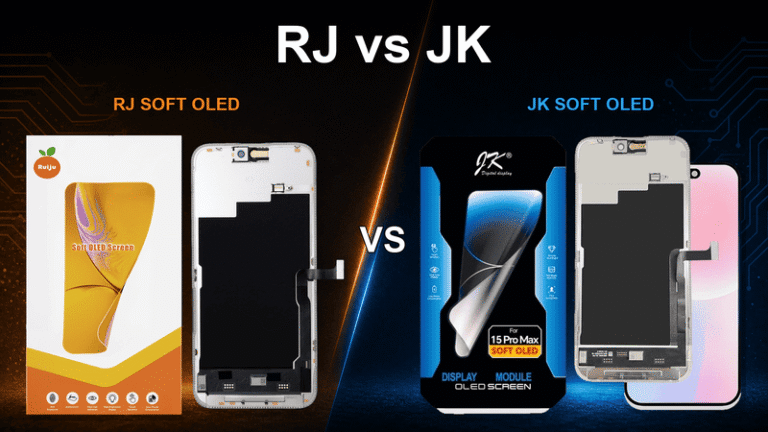
- Soft OLED: These screens use a flexible substrate, just like original Apple screens. They offer the best colors, deep blacks, and are more durable when dropped. They are the closest you can get to original quality. Brands like RJ specialize in this high-end market, and DD's Soft OLED line has become a serious competitor in 2025.
- Hard OLED: These use a rigid glass substrate. They offer good OLED color but are more fragile than Soft OLEDs. They are a fantastic middle ground, providing a near-original look at a lower price. GX is the dominant player in this space.
- Incell: This is an LCD technology, not OLED. The colors and brightness will not be as vibrant as an OLED. But they are reliable, affordable, and get the job done. For older models or budget repairs, they are an excellent choice.
By using this framework, you stop selling parts and start providing solutions. You can confidently tell a customer, "We have a budget option that works great, and a premium option that looks identical to your original screen. Which one fits your situation better?"
If you want a wider view of how to find suppliers behind these brands, our guide on the top brands for iPhone screen replacement qualities covers more of the brand landscape.
How I Test New Screens and Track the Brands I Already Stock
Before I recommend any brand to a partner, I do two things. First, I run new screens through a structured test on a real iPhone. Second, I track every shipment we ship out, batch by batch, for return rates.
For the controlled test I use a single iPhone 15 Pro Max and swap each screen onto the same device, in the same room, with the same camera position. The test covers brightness on a full white screen, black-level performance in a dark room, color reproduction against a standard color card, viewing angles at 45 and 75 degrees, ProMotion behavior, Face ID compatibility, True Tone support after a programmer transfer, and touch precision using a grid drawing app. The same iPhone, the same lighting, the same routine. That is the only way to compare screens honestly.
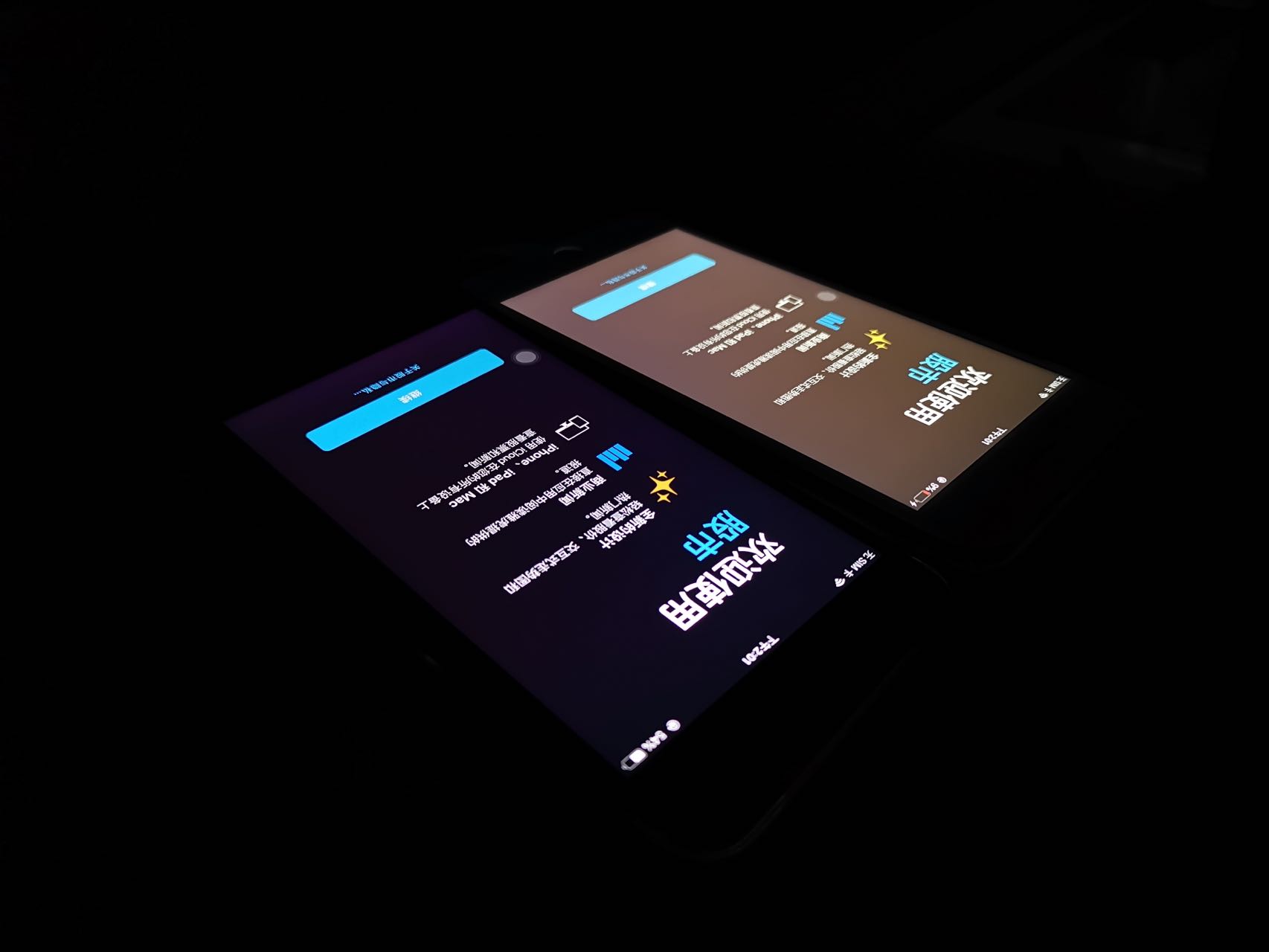
The controlled test tells me what a brand can do at its best. The shipment tracking tells me what they actually deliver over time. We log return rates by brand, by model, and by batch number. A brand that tested beautifully in May can have a bad batch in July if their adhesive supplier changed. Without batch-level tracking you would never see that pattern, and you would blame the brand when the real issue is one bad month of production.
This is the difference between testing a screen once for a YouTube video and actually living with these brands as a supplier. The article you are reading is built on both layers.
What Are the Hidden Risks of GX, DD, JK, and RJ?
Buying replacement screens compatible with iPhone in bulk? See our iPhone screen supplier page for GX, DD, JK, and RJ model coverage, MOQ, quality grades, and shipping options.
Every brand has a personality. After a few years of shipping all four, here is what I have learned about each one's specific weakness, and how to work around it.
GX: The Batch-Dependent King
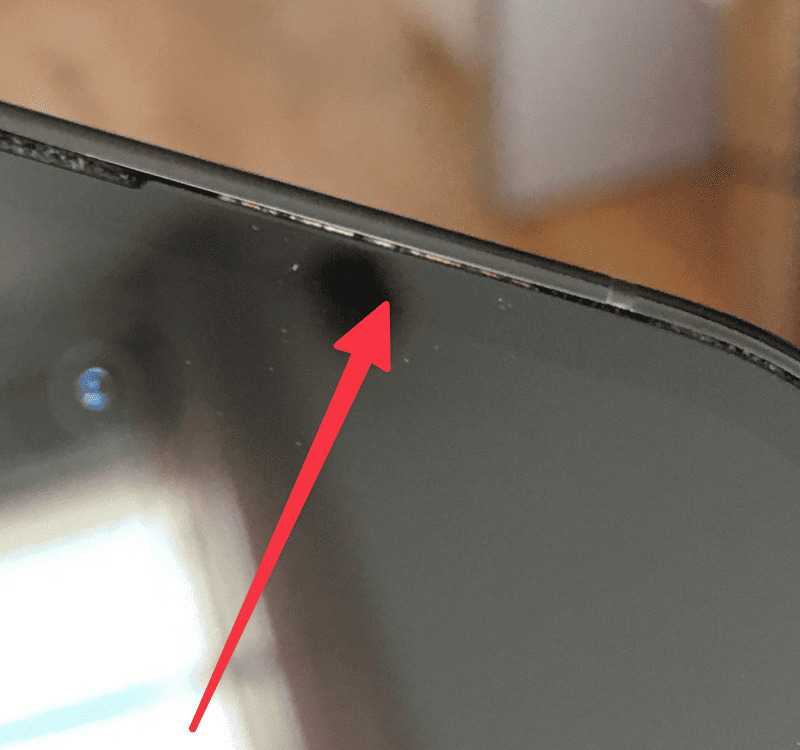
GX became the king of Hard OLEDs for a reason. They offer good color, decent brightness, and a fair price. Their biggest weakness, however, is consistency. We have seen frame separation issues that are entirely batch-dependent. A shipment in May can be perfect, with very low return rates. A shipment in July can have a batch where the frame adhesive was not cured properly, and return rates spike. This is why having a supplier who tests and vets batches, not just brands, is critical. If your supplier ships you whatever box arrives from the factory, you are gambling on the month. Buy GX screens wholesale
DD: The Rising Star of 2025
A few years ago DD was mostly a budget OLED brand. That has changed. In 2025 DD's Soft OLED line stepped up and became a serious competitor to GX in the mid-tier. Their Soft OLED panels are often priced at or above GX Hard OLED, which surprises buyers who still think of DD as a budget option. The reason behind their rise was not flashy new technology — it was consistency. While other brands had batch and model-specific issues, DD focused on manufacturing process control and delivered a stable product, batch after batch. The trap to avoid: "DD" alone tells you nothing — the tier is everything.
JK: The Model-Dependent Touch Layer
JK is another giant. They cover a wide range from Incell to high-tier Soft OLED. They are generally reliable. The pattern we have tracked is touch drift on newer models. We see more reports of erratic touch behavior on JK screens for the iPhone 14 and 15 series. Their screens for the iPhone 11 and 12 series are rock solid. This does not mean "JK is bad." It means you need to be strategic about which models you stock from JK. For older iPhones, JK is a workhorse. For the newest models, our partners often prefer GX Hard OLED or DD Soft OLED instead.
If JK fits your stock plan, you can check our JK iPhone screens distributor page for current JK Incell, Hard OLED, and Soft OLED availability.
RJ: The Premium Performer (and Why You Pay for It)
RJ sits at the top of the aftermarket Soft OLED tier. Color accuracy and brightness are the closest to original Apple panels you can find without going to actual refurbished originals. Return rates on RJ are typically the lowest of the four brands. The trade-off is the price — RJ can cost 1.5x to 2x what GX costs for the same model. For customers who paid for an iPhone 15 Pro Max and want it to feel like the day they bought it, RJ is the right answer. For everyone else, the premium is hard to justify.
Want to see actual wholesale pricing across GX, DD, JK, and RJ for your specific iPhone models? Message me on WhatsApp and I'll send you our current 2026 price list.
Do Aftermarket Screens Have the Same Features as Original iPhone Screens?
Your customer asks if the new screen will be "exactly the same as the original." You want to say yes. But you know there are key differences you must explain to maintain their trust.
No, they do not have all the same features. Most aftermarket screens cannot replicate Apple's 120Hz ProMotion. Features like True Tone may be lost if you don't use a programmer to transfer data from the old screen. And "Original Refurbished" is not the same as "Brand New Original." You need to manage customer expectations.

1. The Truth About 120Hz ProMotion
ProMotion is Apple's name for an adaptive 10–120Hz refresh rate, found on iPhone Pro models from the 13 Pro onwards. It is what makes scrolling on those phones feel buttery smooth. The reality of the aftermarket is that very few screens can truly replicate ProMotion. They might be advertised as "120Hz," but they often cannot adapt the refresh rate properly, leading to stuttering, higher battery drain, or simply running at fixed 60Hz behind the marketing label. For an iPhone 15 Pro Max repair, you must explain this to the customer: "The screen will look fantastic, but the super-smooth scrolling feature from Apple, called ProMotion, won't be identical. That is a limitation of every non-Apple screen on the market right now."
2. "Original Refurbished" Is Not "Brand New Original"
Many suppliers sell "Original Refurbished" or "Orig Refurb" screens. These are good products, but the name can be misleading. Here is what it really means: it is a genuine Apple OLED or LCD panel pulled from a used or broken phone, but the top layer of glass has been replaced. The core display is original, so color and performance are excellent. However, it is not a brand-new screen from Apple's factory. It is a recycled and repaired part. It is a great premium option, just be honest with your customer about what they are getting.
3. Keeping True Tone Alive
True Tone adjusts the screen's white balance to match the ambient light. Many customers do not notice it until it is gone. On most iPhone models, True Tone data is stored on a small IC chip on the original screen. To keep the feature working, you must use a programmer tool (like a JC V1SE or similar) to read that data from the old screen and write it to the new one. If you skip this step, True Tone will be disabled. This is a small step that separates a professional repair from a cheap one.
How Do You Handle the "Unknown Part" Warning After a Screen Replacement?
You finish a perfect screen replacement, and the phone works great. But the customer comes back worried because the phone shows an "Unknown Part" warning. You need a clear, confident answer.
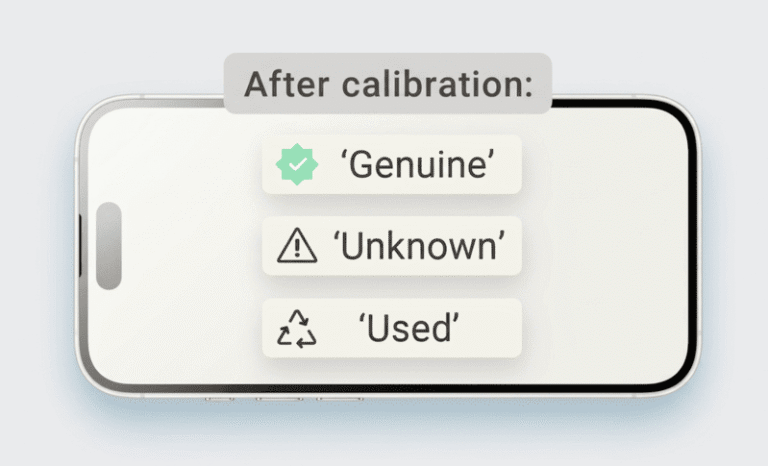
Explain this to the customer before the repair. The "Unknown Part" warning is a software message from Apple. It appears on newer iPhones whenever a part is replaced by someone who is not Apple. It does not mean the screen is faulty or low quality.
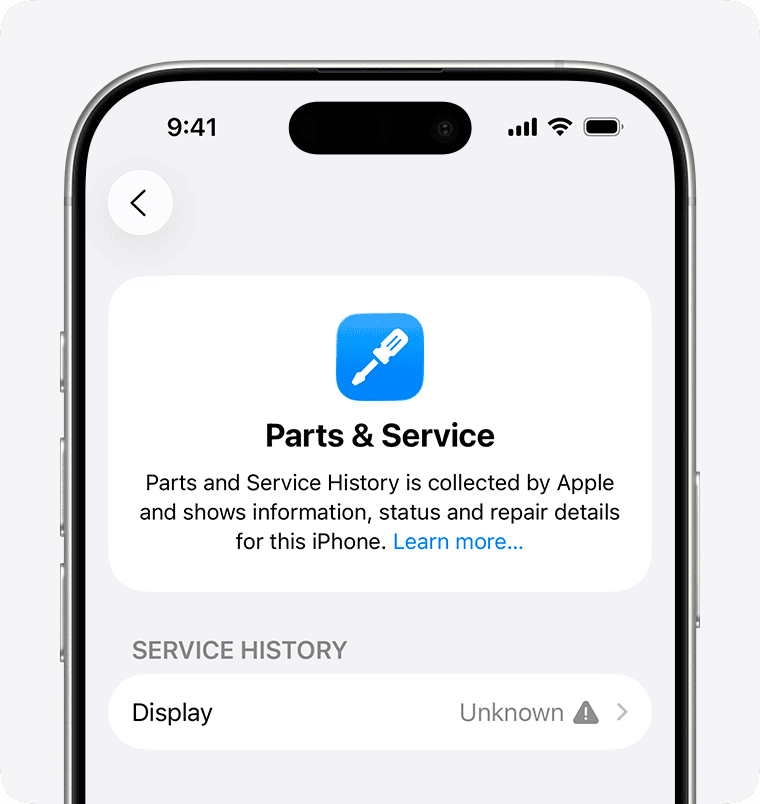
This warning has caused a lot of fear for both technicians and customers. But it is easy to handle if you are prepared. This is part of Apple's "part pairing" or serialization strategy — they are locking components to the phone's logic board.
Turn It Into a Mark of Trust with Transparency
The key is to be proactive, not reactive.
- Educate Before the Repair. When a customer with an iPhone 11 or newer comes in for a screen repair, include this in your conversation. Say something like: "Just so you are aware, because we are not Apple, your phone's software will show a notification that the screen has been replaced. This is normal and happens with any repair done outside of an Apple store. It does not affect the performance of your phone in any way — it is just a software note. We guarantee the quality of our parts and our work."
- Explain What It Is and Is Not.
- It IS: a message stored in Settings → General → About.
- It IS NOT: a sign of a bad part.
- It IS NOT: a pop-up that constantly bothers the user. The initial notification disappears after a few days.
- It DOES NOT: affect the phone's performance.
By explaining this upfront, you manage expectations. You show that you are a knowledgeable expert. The customer is not surprised, and the warning becomes a non-issue. I have a partner in Germany who put up a small printed sign at his counter explaining this. He told me it completely eliminated customer complaints about the warning. That kind of simple transparency builds long-term trust.
Have a specific iPhone model or brand question I didn't cover here? Just WhatsApp me — I answer these every day.
The Real Buying Mistakes I See Every Week
After 11 years in Huaqiangbei, the same mistakes keep coming up. They cost repair shops money and reputation. Here are the four I see most often.
Mistake 1: Buying Incell Marketed as OEM OLED
This is the biggest scam in the aftermarket right now. Some suppliers sell Incell or TFT screens with packaging and labels that mimic high-tier OLED brands. The price is the giveaway — if a "GX OLED for iPhone 14 Pro Max" is being offered at half the going rate, it is almost certainly not an OLED panel inside. Customers will see washed-out colors, poor black levels, and lose Face ID functionality on some installs. Always test a sample from a new supplier before committing to a wholesale order.
Mistake 2: Trusting "120Hz" Labels at Face Value
I covered ProMotion above, but it bears repeating in the mistakes section. A label that says "120Hz" on an aftermarket Pro-model screen is almost always marketing, not engineering. Check the actual behavior under iOS — most aftermarket screens fall back to 60Hz, regardless of what the label promises.
Mistake 3: Choosing on Price Alone, Ignoring RMA
I see new buyers chase the cheapest supplier on AliExpress or Alibaba and end up with a 10–15% return rate. A brand can look cheap on paper but cost you triple after factoring in returns, customer refunds, reputation damage, and reshipping. The right question is not "what does this screen cost?" but "what does this screen cost me after returns?"
Mistake 4: Stocking Too Many Brands at Once
Newer buyers want to test five brands at once and end up with no consistent inventory and confused staff. Pick two brands maximum to start: one mid-tier (GX or DD Soft OLED) and one premium (RJ or high-tier JK). Master them before adding more. A focused two-brand stock with low return rates beats a five-brand stock with chaos every time.
For a deeper procurement-level analysis of these brands and the 2025 market shifts, our 2025 Strategic Guide to iPhone Screen Wholesale goes further into procurement optimization.
If you've been burned by fake OEM labels or quality scams before, talk to me first. I can put together a verified sample pack so you can compare GX, DD, JK, and RJ side-by-side before committing to any wholesale order.
How to Verify You're Getting the Real Thing
Once you have placed an order, here is how to verify the screens before you put them in front of a customer.
Check the FPC Connector and Cable Routing
Every brand has a slightly different cable layout and connector finish. Compare a new shipment to a verified previous batch. If the connector color, the cable bend, or the IC placement looks off, photograph it and send it to your supplier before installing. A clean supplier should welcome that question.
Inspect the Packaging
Premium brands invest in their packaging. Look for crisp printing, batch number stickers, and proper anti-static bags. Knockoffs cut corners on packaging because they cut corners on everything. Inconsistent packaging is one of the earliest signs that a "brand" screen is not what it claims to be.
Run the True Tone Test
After installing the screen and transferring True Tone data with a programmer, walk the phone from a warm indoor light to a cooler outdoor light. The screen tint should shift visibly. If it does not shift, the data transfer failed — or, in some fake-label cases, the panel cannot support True Tone at all. This is a fast, customer-visible quality check.
Test the First Five Units of Every New Batch
Even with a trusted supplier, never install screens from a new batch without testing five units first. Run them through your standard checks: brightness, touch precision across all four corners, Face ID, True Tone, and a 24-hour burn-in on a test phone. Five units is enough to catch a bad batch before it reaches your customers.
2026 Wholesale Price Ranges
Wholesale prices for aftermarket iPhone screens shift monthly based on factory output, raw OLED supply, and seasonal demand cycles. The ranges below are typical for orders in the 50–500 unit range as of early 2026. MOQs and exact pricing depend on the supplier — message me for the current month's numbers.
| iPhone Model | GX (Hard OLED) | DD Soft OLED | JK (Mid Tier) | RJ (Premium Soft OLED) |
|---|---|---|---|---|
| iPhone 11 Pro | $19.4 | N/A | N/A | N/A |
| iPhone 12 / 12 Pro | $25.4 | $29.1 | $33.1 | N/A |
| iPhone 13 Pro | $32.6 | $39.8 | $37.9 | $33.5 |
| iPhone 14 Pro | $45.2 | $44.3 | $37.1 | $41.9 |
| iPhone 15 Pro | $46.7 | $46.7 | $37.1 | $41.9 |
| iPhone 15 Pro Max | $46.7 | $44.3 | $37.1 | $43.8 |
The MOQ tier discounts I see most often are: a baseline price at 10–50 units, roughly 5–8% off at 100 units, 10–15% off at 500 units, and meaningful container-level pricing above 1,000 units. The exact numbers vary by month and brand, so always confirm before locking a quarter's purchase.
For my current 2026 price list with real numbers across all four brands, message me on WhatsApp. I'll send a model-by-model sheet within the same business day.
My Recommendation If You're Buying This Month
If your customers are mostly value seekers and you want one workhorse brand, start with GX Hard OLED for iPhone 11 through 13 Pro, and DD Soft OLED for iPhone 14 and 15 series. That covers about 80% of typical repair shop demand at a sustainable margin.
If you serve a higher-end customer base — premium areas, business clients, customers who specifically asked for "as good as new" — stock RJ Soft OLED for iPhone 13 Pro and newer alongside the GX/DD combination above. Two tiers, three brands, clean inventory.
If your repair volume on iPhone 11 and 12 is heavy and price sensitivity is high, JK Incell or RJ Incell at the budget end gives you a third pricing option for cost-driven customers without complicating your stock too much.
What I would not recommend: trying to stock all four brands across all ten iPhone generations on day one. That is the fastest way to lose track of which batches are good and which are not.
If you want a broader view of supplier options beyond just these four screen brands, see our Top 10 Phone Parts Suppliers in China (2026) for a wider sourcing landscape.
Frequently Asked Questions
Does GX support 120Hz on the iPhone 15 Pro Max? No. GX, like nearly all aftermarket screens, cannot truly replicate Apple's 120Hz ProMotion on Pro-model iPhones. Some GX screens are advertised as 120Hz, but in real iOS use they fall back to 60Hz behavior or stutter. Set customer expectations on this before the repair.
Is JK screen good for Face ID on iPhone 14 and 15? Generally yes — JK screens support Face ID on most iPhone models when installed correctly, with the proximity sensor area properly aligned. The touch drift issue we've seen on JK 14/15 series is separate from Face ID functionality. Most Face ID problems on aftermarket installs come from installation, not from the panel.
Are DD and GX the same panel? No. They are different brands from different factories. GX is primarily a Hard OLED brand. DD has both Incell and Soft OLED product lines, and the DD Soft OLED tier is what rose against GX in 2025. Anyone telling you "DD is just GX with a different label" does not know the market.
Which brand has the lowest RMA rate? In our shipping data, RJ typically has the lowest return rate of the four brands because it sits in the premium tier. GX is consistent when batches are vetted. JK and DD vary more by model and tier. The bigger factor is whether your supplier tracks and rejects bad batches before they ship to you — that matters more than the brand average.
What's the warranty on aftermarket screens? Most reliable suppliers offer a 12-month warranty on aftermarket OLED screens (Soft OLED and Hard OLED). Incell and budget tiers may have a 6-month warranty. Always confirm warranty terms in writing before placing a wholesale order, and ask specifically about RMA processing time and shipping responsibility for returns.
Will my customer see the "Unknown Part" warning regardless of which brand I use? Yes. On iPhone 11 and newer, iOS shows the "Unknown Part" notification after any non-Apple screen replacement, regardless of brand or quality. It does not affect performance and dismisses after a few days. Educate the customer before the repair, not after.
Final Word
Choosing the right screen is not about finding the "best brand." It is about matching the part to the customer. GX, DD, JK, and RJ all have a place in a well-run repair shop's inventory — the question is which two or three you pick, and whether your supplier vets the batches before they ship to you.
I'm Lion Lin. I run Fizon Parts, and we have been working phone parts in Huaqiangbei for over 11 years. We stock all four brands covered in this guide, with batch-level RMA tracking and a 12-month warranty on our OLED tiers. If you want current pricing, MOQ details, a verified sample pack, or just an honest second opinion before you place a big order, WhatsApp me directly. I answer my own messages.
Talk to me about wholesale screens.