
New to JK? Start with our full JK iPhone screens guide for grades, model coverage, and factory-direct pricing.
If you buy iPhone replacement screens wholesale, JK and GX are two of the names you already know — and that's exactly why the choice is harder than it looks. Both are established, widely recognized aftermarket brands. We supply both, factory-direct, to repair shops and distributors, so here's the honest, first-hand split: where they're genuinely matched, the one difference that should decide it for your shop, and how to get either at factory-direct pricing.
Here's the short version most sellers won't tell you: the difference isn't quality — it's price and positioning. GX is the premium-priced name; JK gives you the same recognized-brand confidence, with the strongest Incell pedigree in the market, at a friendlier mid-tier price.
The Quick Answer
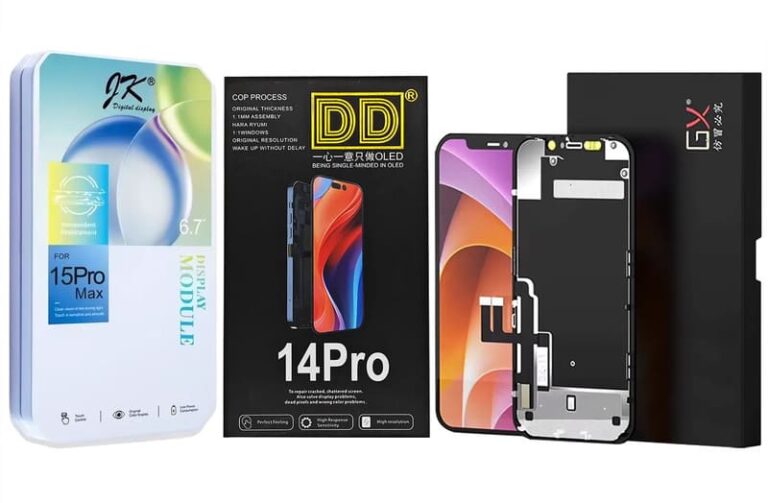
Both are top-recognized brands, so you're not trading away trust either way. GX sits at a premium price tier — you pay for broad coverage and proven consistency, and for a lot of buyers that's the point. JK is the recognized Incell standard-bearer at mid-tier pricing: the value pick, especially if your inventory leans Incell. If your customers want the premium name and you'll pay for it, GX. If you want a name they trust at a better margin, JK. Plenty of shops stock both and split by price tier — and we can quote you both from one place. Send us your model list and we'll price out either or both.
Who Are JK and GX?
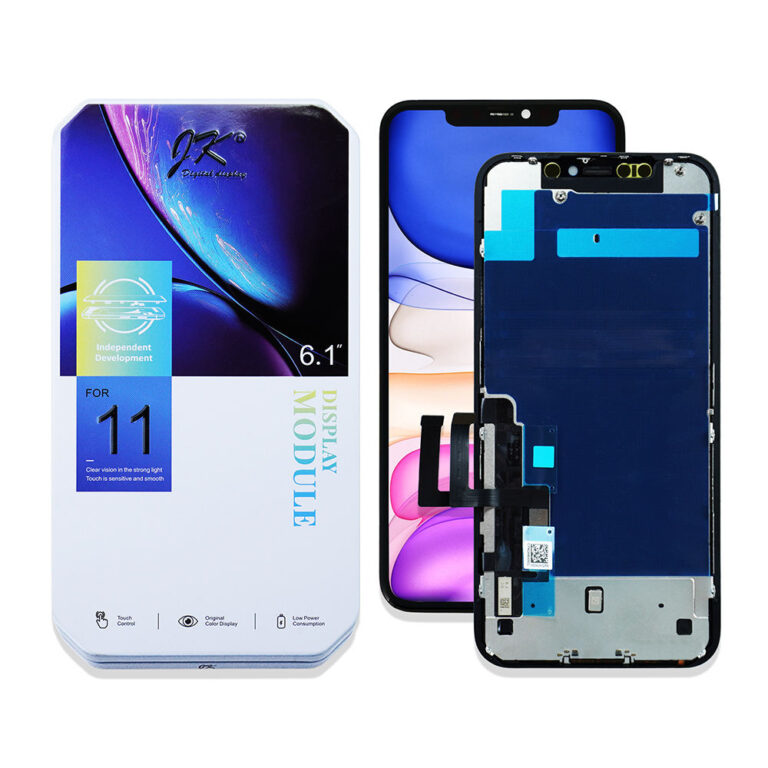
JK is one of the most recognized names in aftermarket iPhone displays1 — a veteran manufacturer since 2006 and one of the original pioneers of Incell technology. It's the brand most repair techs recognize on sight, it covers all three grades (Incell FHD2, Hard OLED, Soft OLED), and it sits at a mid-tier price. If you want the full background, see our JK iPhone screens guide.
GX is the other name you'll run into constantly — a broad, well-established brand with wide model coverage and a reputation for consistent batches. That reputation comes at a premium price, and for buyers who want a top-tier name across the whole range without thinking twice, that premium is the point.
JK vs GX: Side by Side
| JK | GX | |
|---|---|---|
| Recognition | Widely recognized, Incell standard-bearer | Widely recognized, premium positioning |
| Grades offered | Incell FHD · Hard OLED · Soft OLED3 | Hard OLED · Soft OLED |
| Incell | Pioneer — the aftermarket Incell benchmark | Strong |
| OLED (Hard / Soft) | Strong | Strong |
| Batch consistency | Strong | Strong (premium) |
| Price tier | Mid | Premium |
| Best fit | A trusted name at value pricing; Incell-heavy stock | Premium consistency and breadth; name-pays buyers |
Read it the right way: on grades, OLED, and consistency these two are close — both are brands we're happy to put our name behind. What actually separates them is the bottom two rows: JK's Incell pedigree, and the price you pay for the name. Everything else is close enough that it shouldn't drive your decision.
Where GX Is the Better Call
To be fair to GX — and we sell it, so this is straight:
- Premium consistency. GX's batch-to-batch reliability4 is part of what the premium buys, and for high-volume shops that can't afford surprises, that's worth real money.
- Broad, premium-tier coverage. If you want one premium name across the widest possible model range and don't mind paying for it, GX is a low-risk default.
- The premium-name pitch. In markets where buyers equate a higher price with a better part, GX's positioning can actually help you sell up.
Where JK Is the Better Call
- The same recognition, at a friendlier price. JK is just as much a name your buyers trust — but at mid-tier pricing instead of GX's premium. For most shops, that's a direct margin win on a brand customers already accept.
- The Incell standard. JK pioneered aftermarket Incell and is still the benchmark for it. If a big share of your volume is Incell FHD repairs, JK is the natural pick.
- Value without trading down. You're not choosing an unknown to save money — you're choosing a recognized name that costs less. That's the whole appeal.
- Factory-direct pricing. We supply genuine JK at factory-direct pricing, so you're not paying a premium for the name on the box.
Which Should You Stock?
Skip the "best brand" debate and match the brand to how you sell:
- Your buyers pay for the premium name and you sell up on it → GX.
- You want a recognized name at a better margin → JK.
- Your inventory is Incell-heavy → JK, the Incell benchmark.
- You run a broad inventory → stock both, and split by price tier: GX on the premium shelf, JK as the recognized value option.
The practical move either way: get both from one factory-direct source, so you're not juggling suppliers or paying a middleman on either brand.
Why Buy Either One From Us
This is what we do all day. We supply both JK and GX wholesale, factory-direct, and QC-test every batch before it ships — so you get a straight answer on which brand fits your business, and the screens to back it up, from one place:
- Genuine, factory-direct pricing on both brands — not marked up through a chain.
- Mix in one order — JK and GX, multiple grades and models, one shipment, one invoice.
- Every batch QC-tested before it leaves us, with DOA cover5 — so a brand decision doesn't turn into a returns problem.
- Samples on request — compare both on your own bench before you commit to volume.
- Worldwide shipping, serving distributors across Europe and the Nordics.
Send us your model list and grade preference for a current quote, or message us on WhatsApp — tell us how you sell and we'll tell you, honestly, which one (or both) to stock.
The Bottom Line
JK vs GX isn't a quality contest — both are recognized brands we stock and stand behind. It comes down to price and pedigree: GX for premium-tier consistency if you'll pay for it, JK for the same trusted-name confidence at a friendlier price, with the strongest Incell credentials in the market. Most shops end up carrying both. Either way, the easiest next step is to get samples and a factory-direct quote and decide with the screens in your hands.
See our complete JK iPhone screens guide for grades, model coverage, and pricing — or send us your list for a current quote.
FAQ
Is JK or GX better for iPhone screens? Neither is better — both are established, widely recognized aftermarket brands, and they're close on grades, OLED, and consistency. The real difference is price and pedigree: GX sits at a premium tier, while JK gives you the same recognized-name confidence at mid-tier pricing and is the aftermarket Incell benchmark. Pick GX if your buyers pay for the premium name; pick JK for a trusted name at a better margin.
Is JK cheaper than GX? Generally, yes. JK is positioned at a mid-tier price point while GX sits at a premium tier, so JK typically gives you a recognized brand at a friendlier cost. Exact pricing depends on grade, model, and order volume — send your list for a current factory-direct quote.
Which is better for Incell screens, JK or GX? JK. It pioneered aftermarket Incell technology and is still the benchmark most shops measure Incell against. GX's Incell is solid too, but if your inventory is Incell-heavy, JK is the natural pick — and at a friendlier price.
Can I buy both JK and GX screens wholesale from one supplier? Yes. We supply both JK and GX wholesale, factory-direct, and you can mix grades and models across both brands in a single order. Send your model list and grade preference for a current quote, or ask for samples of both to compare on your bench.
"Automotive aftermarket - Wikipedia", https://en.wikipedia.org/wiki/Automotive_aftermarket. Aftermarket parts are replacement components for a product, such as a car or phone, that are manufactured by a company other than the product's original manufacturer (OEM). They often provide a more cost-effective alternative to OEM parts. Evidence role: definition; source type: encyclopedia. Supports: The article is about aftermarket iPhone displays. A source should define 'aftermarket parts' as components made by a company other than the original equipment manufacturer (OEM).. ↩
"How to Choose iPhone InCell Screen Quality: HD vs FHD ... - Fizon", https://fizonparts.com/how-many-incell-qualities-does-iphone-screen-has-what-is-an-incell-screen/. FHD, or Full High Definition, is a display resolution standard corresponding to 1920 pixels wide by 1080 pixels tall, which provides a high level of detail for consumer electronics. Evidence role: definition; source type: encyclopedia. Supports: The article uses the term 'Incell FHD'. A source should define FHD as 'Full High Definition,' which typically refers to a display resolution of 1920x1080 pixels.. Scope note: The exact resolution of a specific aftermarket phone screen may vary to match the phone model's native aspect ratio, even when marketed as FHD. ↩
"IPhone 13 LCD vs OLED Replacement : r/mobilerepair - Reddit", https://www.reddit.com/r/mobilerepair/comments/10xkac9/iphone_13_lcd_vs_oled_replacement/. Technical guides for repair professionals explain that Soft OLED screens use a flexible plastic substrate, similar to original Apple screens, offering better durability and impact resistance, whereas Hard OLED screens use a rigid glass substrate, making them more fragile but less expensive. Evidence role: definition; source type: education. Supports: The article lists Hard and Soft OLED as screen types. A source should explain the technical differences, noting that Soft (flexible) OLEDs are more durable and closer to OEM quality, while Hard (rigid) OLEDs are a more brittle but cost-effective alternative.. ↩
"A perspective on Quality-by-Control (QbC) in pharmaceutical ... - PMC", https://pmc.ncbi.nlm.nih.gov/articles/PMC9948678/. In manufacturing and supply chain management, ensuring batch-to-batch consistency is a key aspect of quality assurance that minimizes defects and ensures predictable performance, often commanding a premium price for components where reliability is critical. Evidence role: mechanism; source type: education. Supports: The article claims that GX's premium price is partly for its batch-to-batch reliability. A source should explain why consistency is a critical factor in electronics manufacturing and supply chains, especially for B2B customers like repair shops.. Scope note: This provides general support for the principle but does not specifically verify the batch consistency of the GX brand itself. ↩
"DOA Policy & Forms - WI DOA - Wisconsin.gov", https://doa.wi.gov/Pages/PolicyandForms.aspx. In the electronics and wholesale industries, 'Dead on Arrival' (DOA) refers to a policy where a supplier guarantees that a product will be functional upon receipt and typically offers an immediate replacement or refund for items that are not. Evidence role: definition; source type: other. Supports: The article mentions 'DOA cover'. A source should define DOA as 'Dead on Arrival,' a term used in warranties to describe products that are non-functional upon delivery.. ↩